Arthur Butterworth
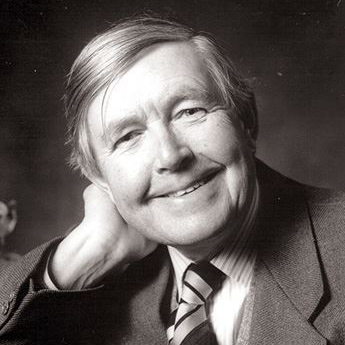
Arthur Butterworth was born in Manchester in 1923 and studied composition at the Royal Manchester College of Music, eventually becoming a trumpeter in the Scottish National Orchestra. Later he returned to his native Manchester to join the Hallé Orchestra, where, in 1957, his First Symphony was successfully launched by Sir John Barbirolli. This ultimately led to his being able to relinquish orchestral playing and devote more time to composition.
Arthur Butterworth has also been active as a conductor, although it is now as a composer that he is better known. Despite an early interest in the avantgarde, his music is firmly traditional, having being particularly influenced by Sibelius and the nordic culture as well as by English music of the first part of the 20th century. Major works include four symphonies, concertos for violin, viola and 'cello, and music for many varied ensembles, including wind instruments, many of them commissioned. In recent years, his music for chamber ensembles has become better known and is accessible not only to professionals, but to the growing market of good amateur players.
Although the manuscript of the First Symphony, Op. 15, had been completed in March 1956 there were no plans for its performance. By this time, Butterworth had been a member of the Hallé Orchestra for more than a year, during which the intensive round of concerts left little time for composition, so that it was perhaps surprising that the symphony was ever finished. However, it was submitted to Sir John Barbirolli for consideration but it was not until almost a year later, in February 1957, that its first performance was announced for the forthcoming Cheltenham Festival that year. It was this performance that led to the composer's first widespread recognition.