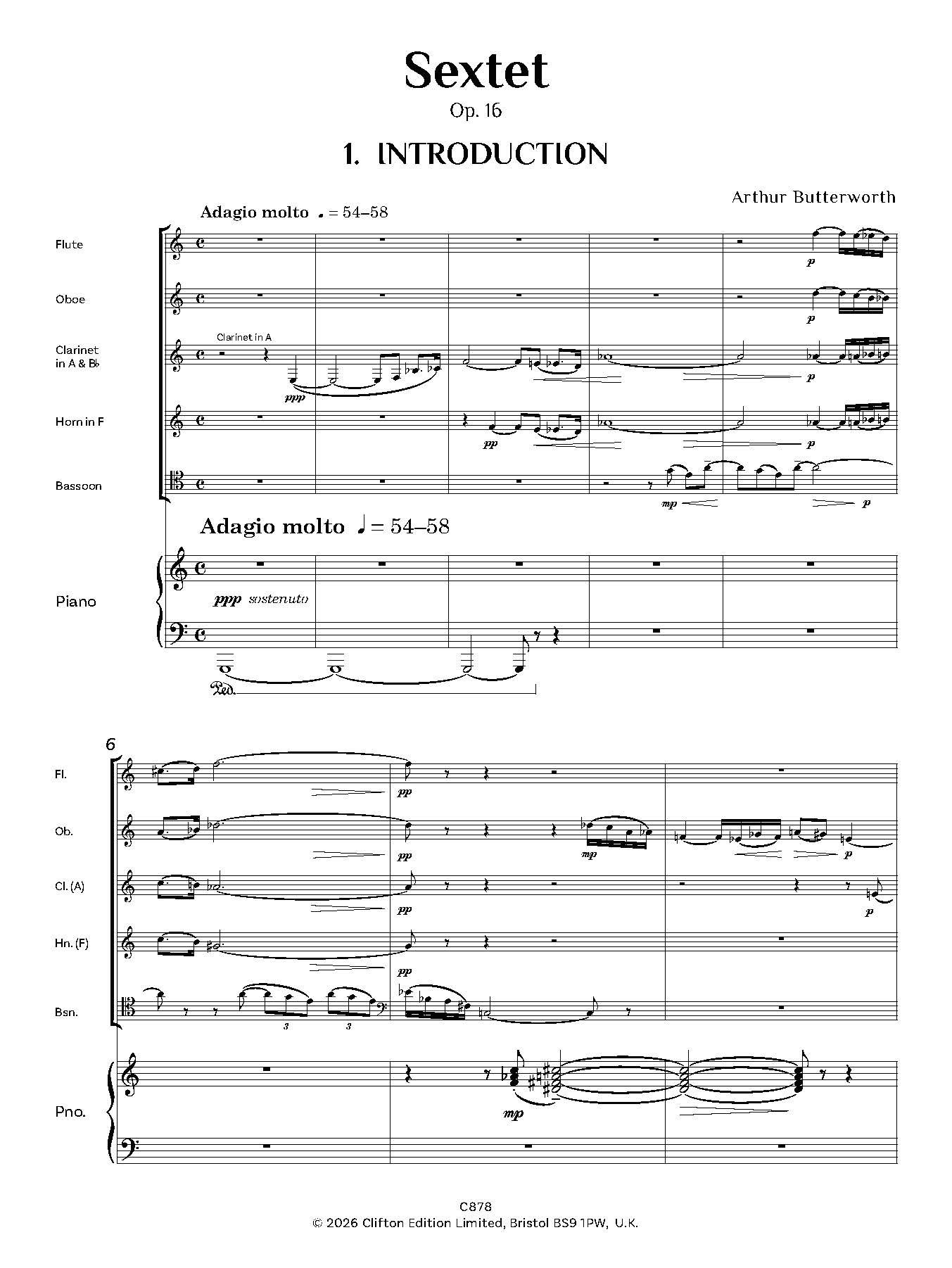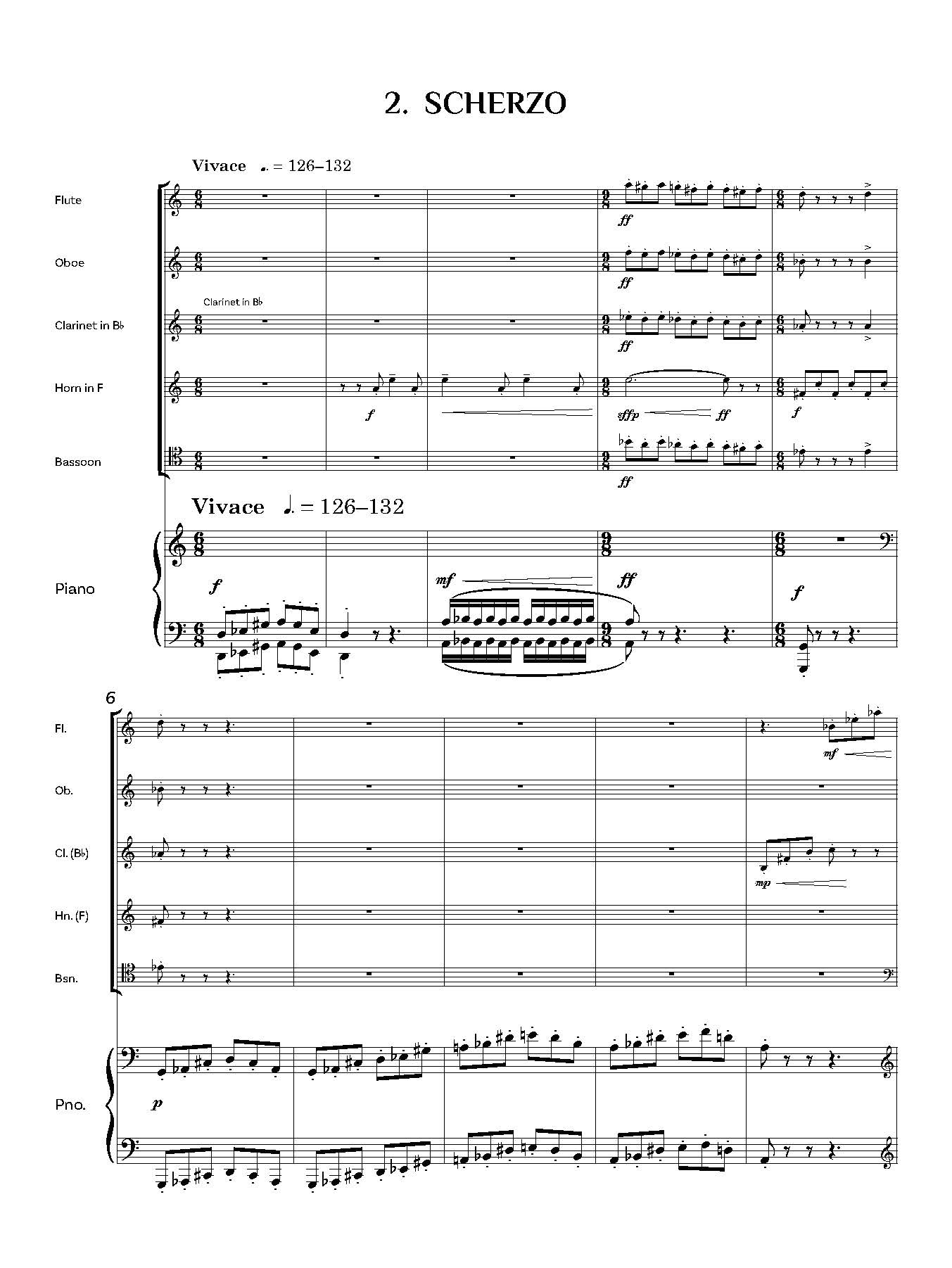
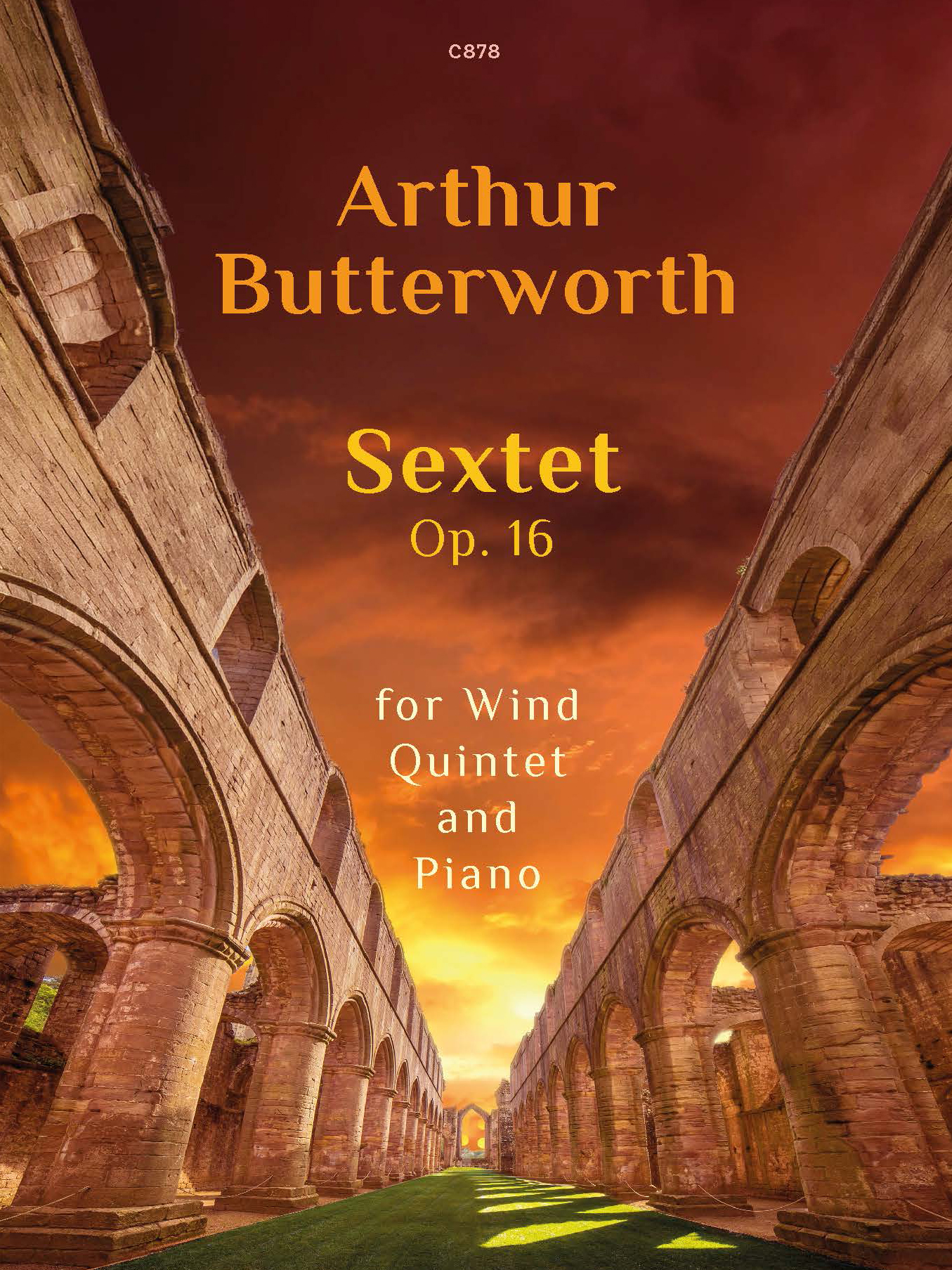
Arthur Butterworth's Sextet, Op. 16 is scored for Flute, Oboe, Clarinet in Bb and A, Horn in F, Bassoon and Piano.
Several fellow-players in the Hallé Orchestra knew of his work as a composer and one of them, the Hallé’s principal horn player, Maurice Handford – later to become better known as the Orchestra’s associate conductor – suggested that Butterworth write a work for the Manchester Wind Ensemble; a chamber music group made up of the Hallé principal wind players, all Butterworth’s close friends and companions. So came about the Sextet, Op. 16 which was written in what few spare moments were to be had in the latter part of 1956. Its form is simple enough: a short Introduction is followed by a scherzo-like movement with a more reflective secondary theme, and the return of the scherzo itself. Stylistically it bears only a superficial relationship to the Symphony’s large-scale design and dark, brooding, Nordic harmonies, which are hardly to be found in the smaller-scale chamber work.
The first performance – preceding that of the 1st Symphony on 19th July – took place at Stretford Library Theatre, Manchester, on 23rd January 1957. The players were William Morris (flute), Michael Winfield (oboe), Leonard Foster (clarinet), Charles Cracknell (bassoon), Maurice Handford (horn) and Rayson Whalley (piano), who, in addition to being the Orchestra’s pianist, was also the principal percussionist.
Listen to audio samples
from No. 1. Introduction
A short excerpt from the final bars
A short excerpt from the opening of No. 2. Scherzo
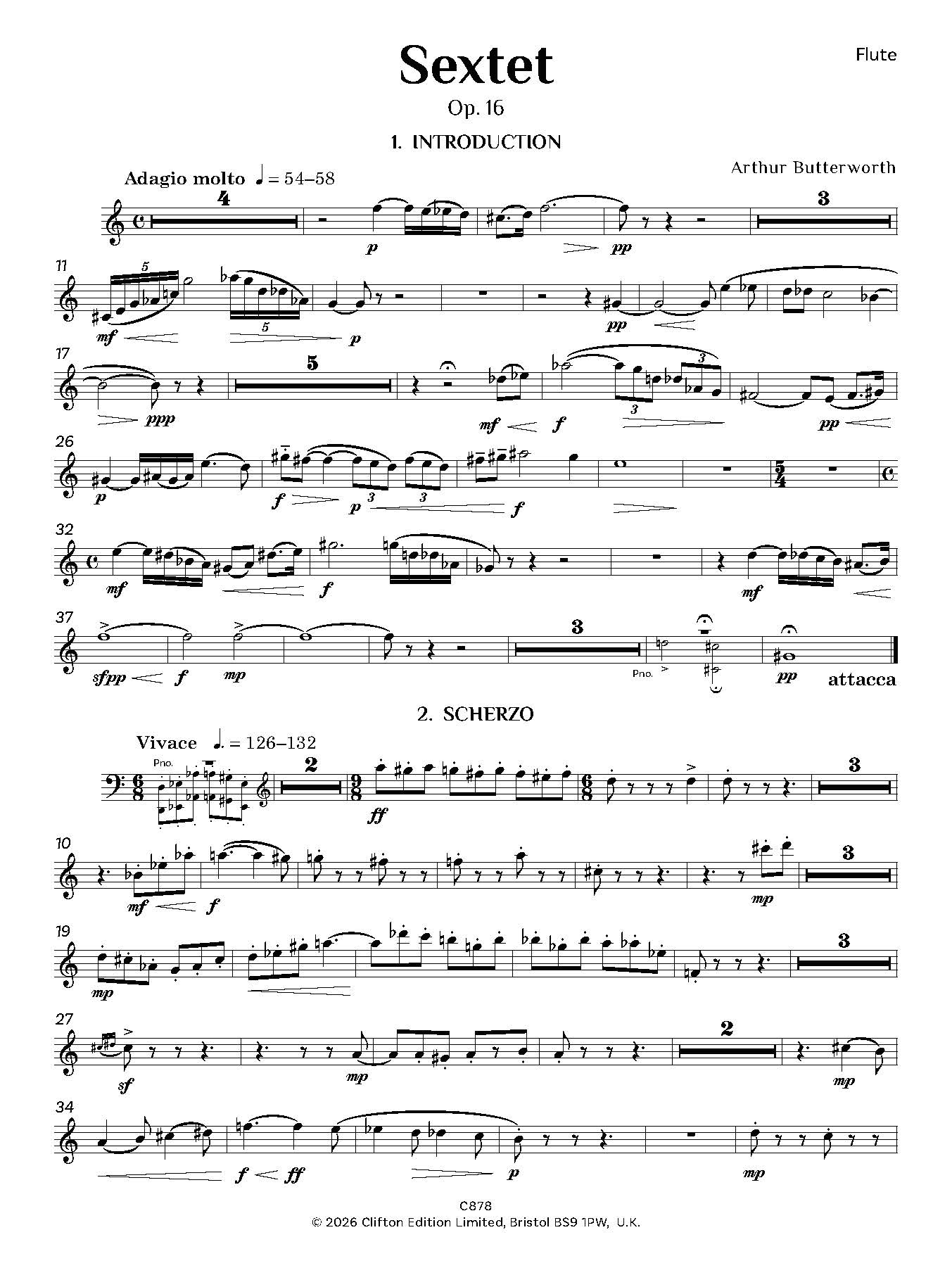
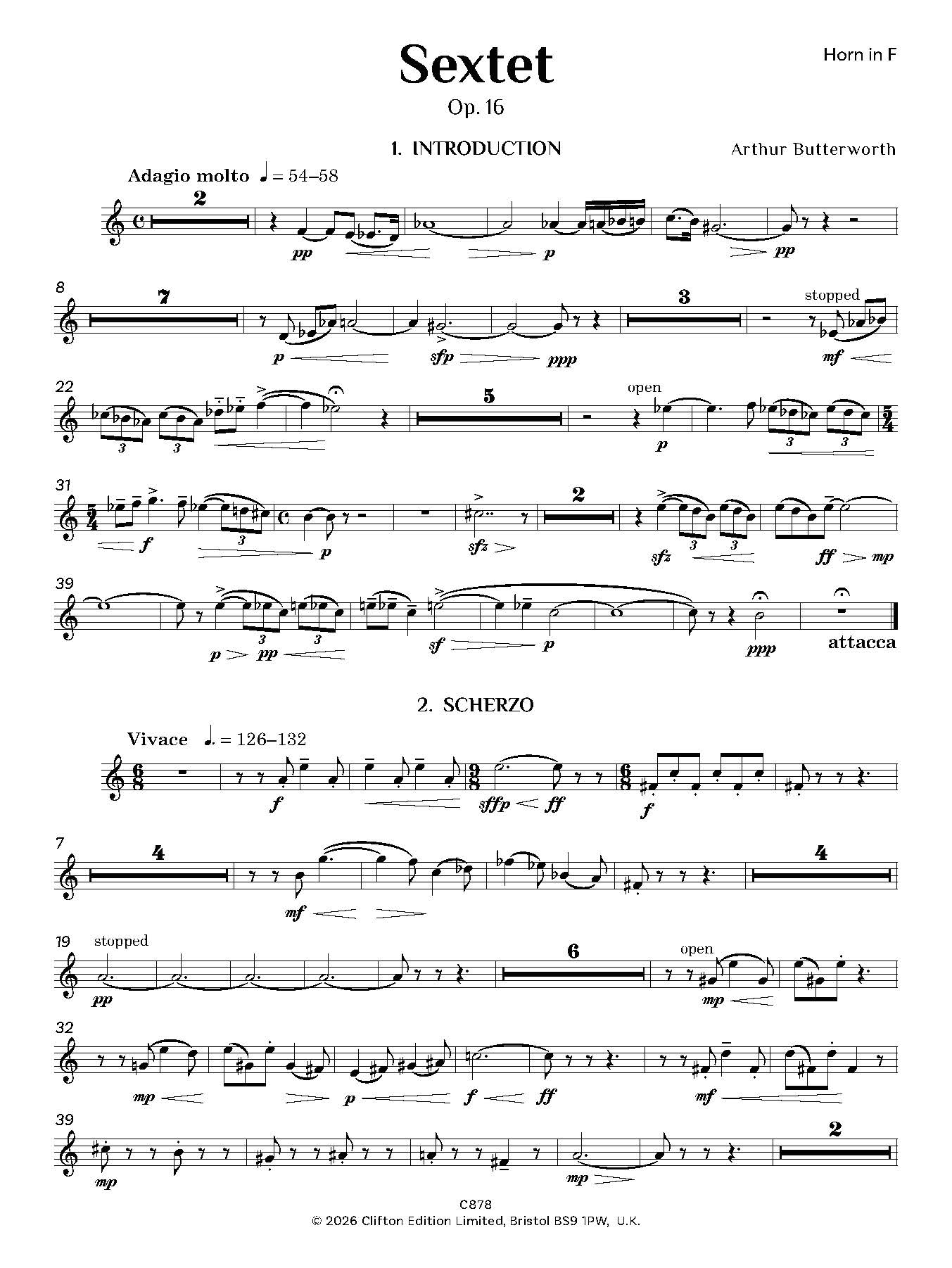
Sample Pages