
Carl Maria von Weber
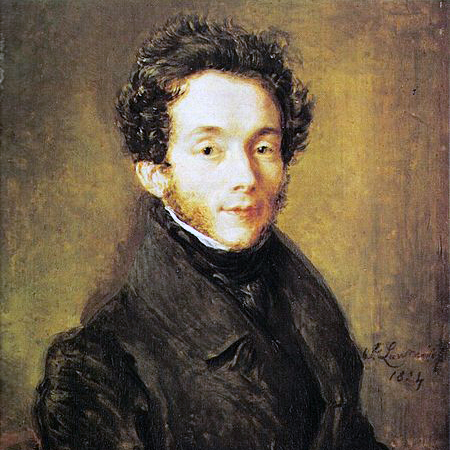
Carl Maria von Weber (1786-1826) was a German composer and opera director during the transition from Classical to Romantic music, noted especially for his operas Der Freischütz (1821; The Freeshooter, or, more colloquially, The Magic Marksman), Euryanthe (1823), and Oberon (1826). Der Freischütz, the most immediately and widely popular German opera that had been written to date, established German Romantic opera.
Weber had long been interested in writing and musical criticism, and during this period wrote many pieces on music and musicians. He did not especially admire the work of Beethoven. Nonetheless, Beethoven received him with great warmth and cordiality when Weber was in Vienna. In 1816, Weber was appointed Director of the German Opera Dresden and was confirmed for his life a year later. Soon after, he married Caroline Brandt.
Weber became enthusiastically interested in German opera and in the German folklore from which many of the plots were derived. His first grand opera, Der Freisch (The Marksman), was composed there and was premiered in Berlin to wild acclaim in 1821. It was performed fifty times in the next eighteen months, making large profits for the opera house.
Freischütz made Weber famous all over Europe and it remains his most appreciated work. Weber composed two more grand operas, Euryanthe, of which now only the overture is performed, and Oberon, which he was commissioned to compose by Covent Garden Opera in London. The effort to compose Oberon and prepare it for performance in London took a fatal toll on his health.
Suffering from diseased lungs and a weakened heart, Weber succumbed to the strain he placed on his health. He died in his sleep on June 6, 1826, two months after the hugely successful premier of Oberon in Covent Garden.
Weber was a small, energetic man, who could never sit completely still. He was genial, witty, and had many close friends. Richard Wagner credited Weber with being the father of the Romantic Opera. Though he composed few operas, they had great audience appeal and received many performances in their time.
Many of his chamber works, concertos, and “concert pieces” still survive, the most famous being perhaps his Invitation To The Dance.