This is the vocal score. Minimum order of 8 copies. Volume discounts are available.
Full orchestral score and instrumental parts are available. See C910.
Preface
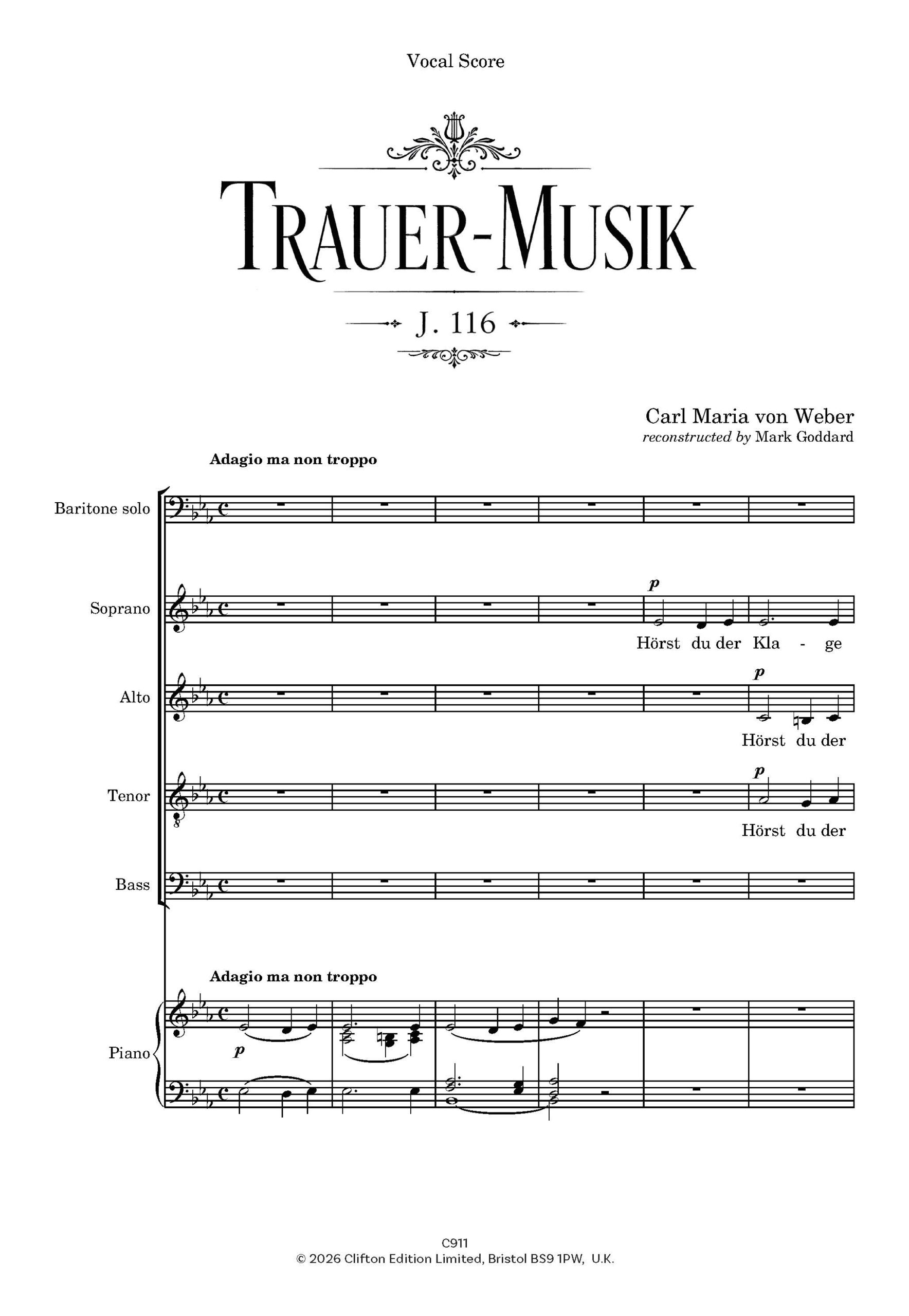
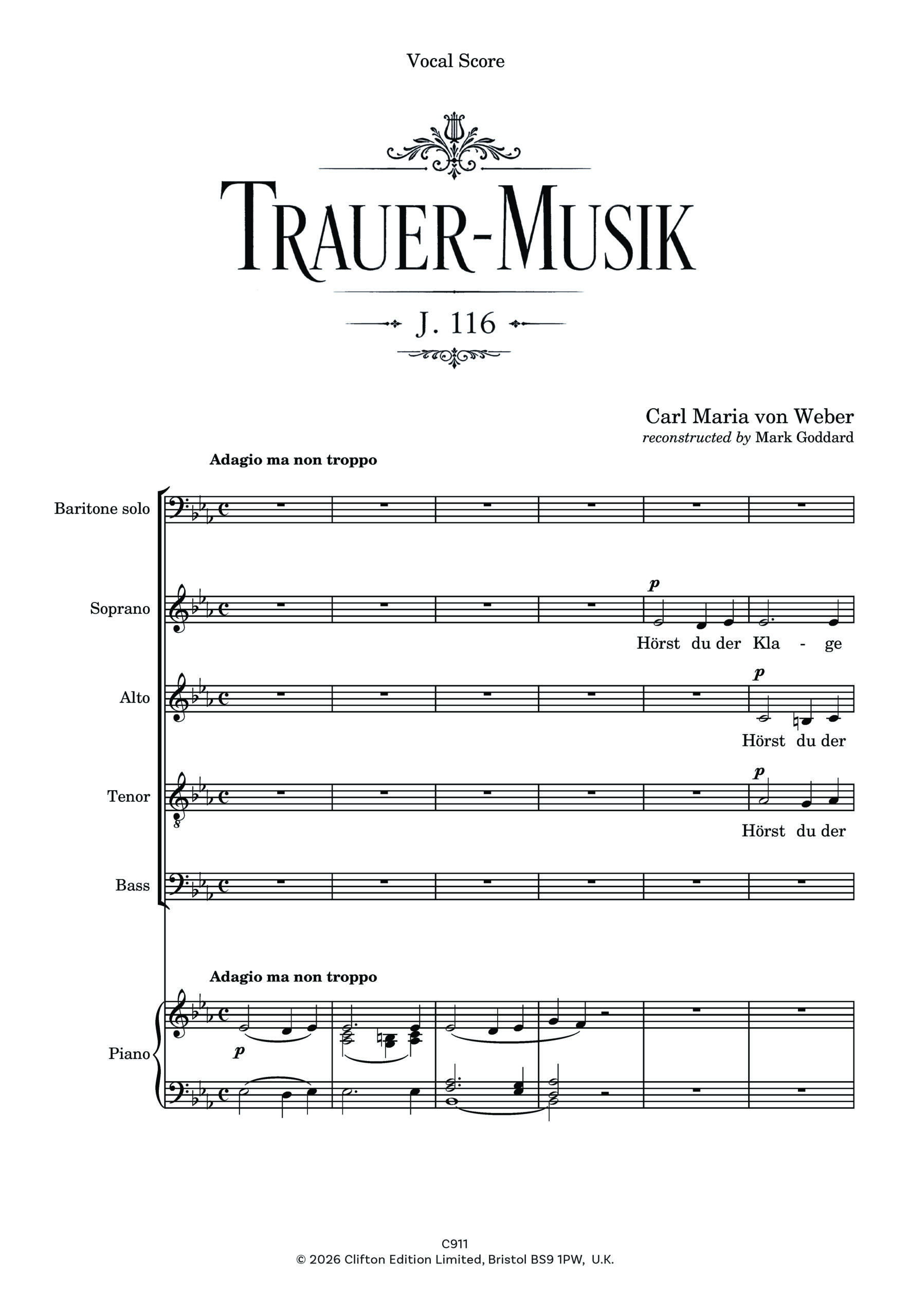
Trauer-Musik (Mourning Music)
(J. 116)
for the actor Max Heigel
This previously unpublished work by Carl Maria Von Weber was completed in 1811: a pivotal year in Weber’s career. He met and worked with the Munich court clarinettist Heinrich Baermann and composed the Concertino in E Major for him, as well as the two concerti (J. 114 and J. 118).
N. B. This work is not to be confused with Richard Wagner’s Trauermusik, which uses themes by Weber from his opera “Euryanthe”.
The dedicatee, Max Heigel, was a German actor, poet and librettist. Max was a friend of Weber’s and in this same year, Max’s father died, prompting the composition of Trauer-Musik which was written between composing the two clarinet concerti.
Mark Goddard reconstructed the music in March 1986, working closely with the late Dr Marshall Stoneham, a distinguished research physicist and a keen musician and musicologist. He was a gifted player of the French horn, and ran a long-standing wind chamber group for more than 40 years. His prizewinning Wind Ensemble Sourcebook (1997) was the fruit of many years' research in libraries around the world, often visited while travelling to scientific conferences or to meet international collaborators.
Scoring
Baritone Soloist
Four Part Choir (SATB)
Flute
2 Clarinets in Bb
2 Bassoons
2 Horns in F
2 Trumpets in Bb
Bass Trombone
Timpani
Duration: approx. 6 minutes
See C910 for Full Score and set of parts.
Libretto (in English)
Are you not hearing the dull sound of the lamentation of your grave?
Perhaps, amid the evening ray, Your spirit hovers round this silent valley of graves,
And look at our celebration here, and look at our celebration here!
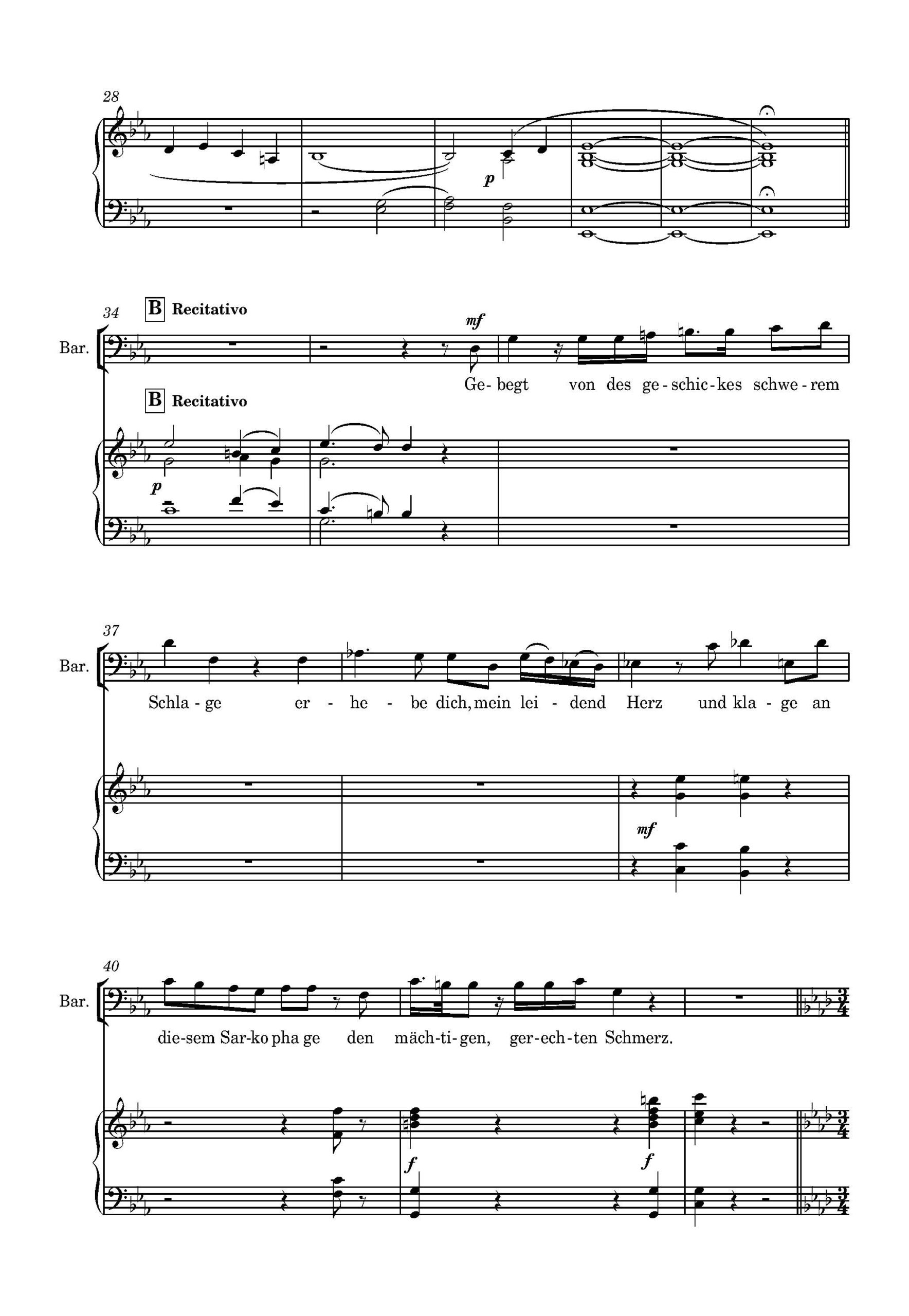
Bent beneath the heavy blow of destiny,
rise, my suffering heart, and pour out
before this sarcophagus
your great and rightful sorrow.
The friend, whose games and life charmed us, whom death took from our midst; the friends’ hearts beat so fearfully and heavy, the Trevenach lament, the loyal ones oh they lament;
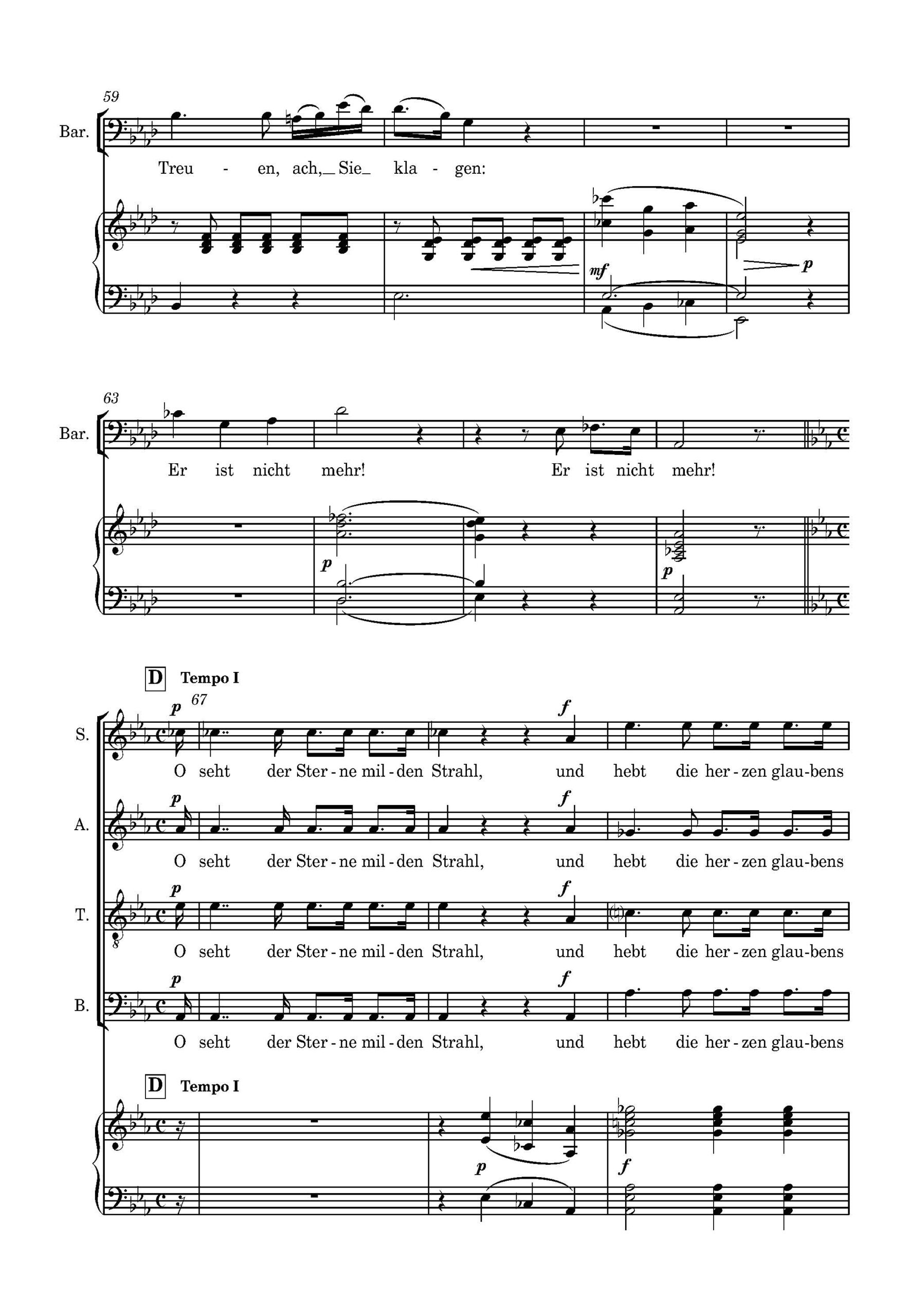
He is no more! He is no more!
O see the stars’ mild rays and lift the hearts of believers from this gay life,
wherever he lives, wherever he lives, in the wide space, in the wide space, the spirit of the friend.
He is well, he is well, yes he is well, he is well wherever he lives, he is well, wherever he reads, he is well!
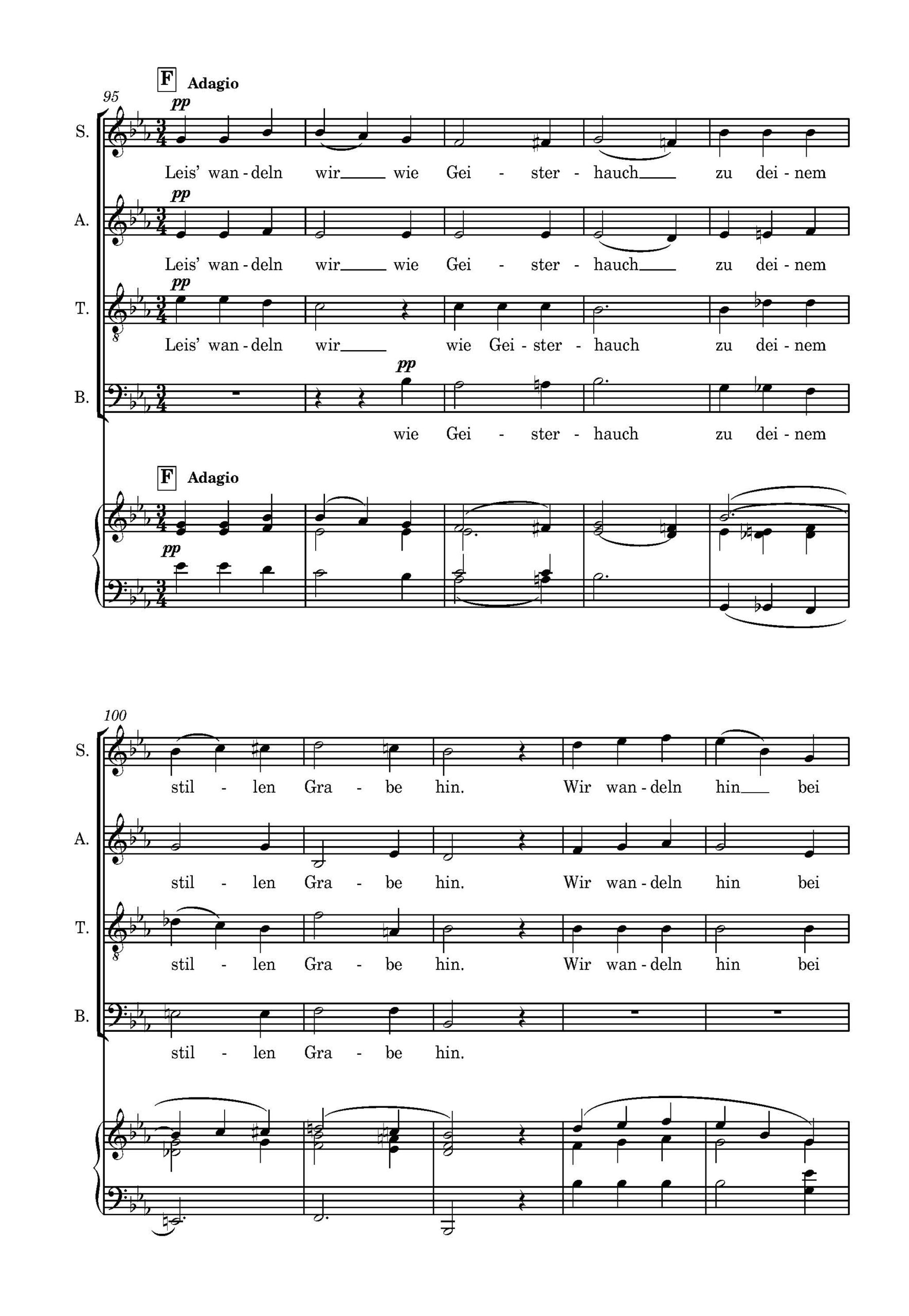
Silently we wander like a ghost to your quiet grave. We wander underneath the star gaze and bring you the dead wrath made from rosemary and evergreen.
Well be you, O friend, in that mockery in which we once saw each other! O well, well be you, O friend. Where we once saw each other! Well be you, well be you, O friend.
Libretto (in German)
Hörst du der Klage dumpfen Schall in deinem Grabe auch nicht mehr?
Viel leicht um schwebt im Abendstrahl dein Geist dies stille Gräberthal,
Und blickt auf unsre Feier her, und blickt auf unsre Feier her, auf unsre Feier her!
Gebegt von des geschickes schwerem Schlage erhebe dich, mein leidend Herz und klage an diesem Sarkophage den machtigen, gerechten Schmerz.
Den Freund, des Spiel und Leben uns gleich entzuckt, ihn hat aus unsrer mitte der Tod entruckt; der Freundeherzen schlagen so bang und schwer, die Trevenach sie klagen, die Treuen, ach, Sie klagen; Er ist nicht mehr! Er ist nicht mehr!
O seht der Sterne milden Strahl, und hebt die herzen glaubensvoll aus dieses Lebens schwülem Thal, wo er auch lebt, wo er auch lebt, im weiten All, im weiten All, der Geist des Freundes.
Ihm ist wohl, ihm ist wohl, Ja ihmist ihm ist wohl, ihm ist wohl, we er auch lebt, ihm ist wohl, wo er auch lest, im ist wohl!
Leis’ wandeln wirwie Geisterhauch zu deinem stillen Grabe hin. Wir wandeln hin bei: sternenglanz und bringen dir den Todtenkranz von Rosmarin und Immergrün.
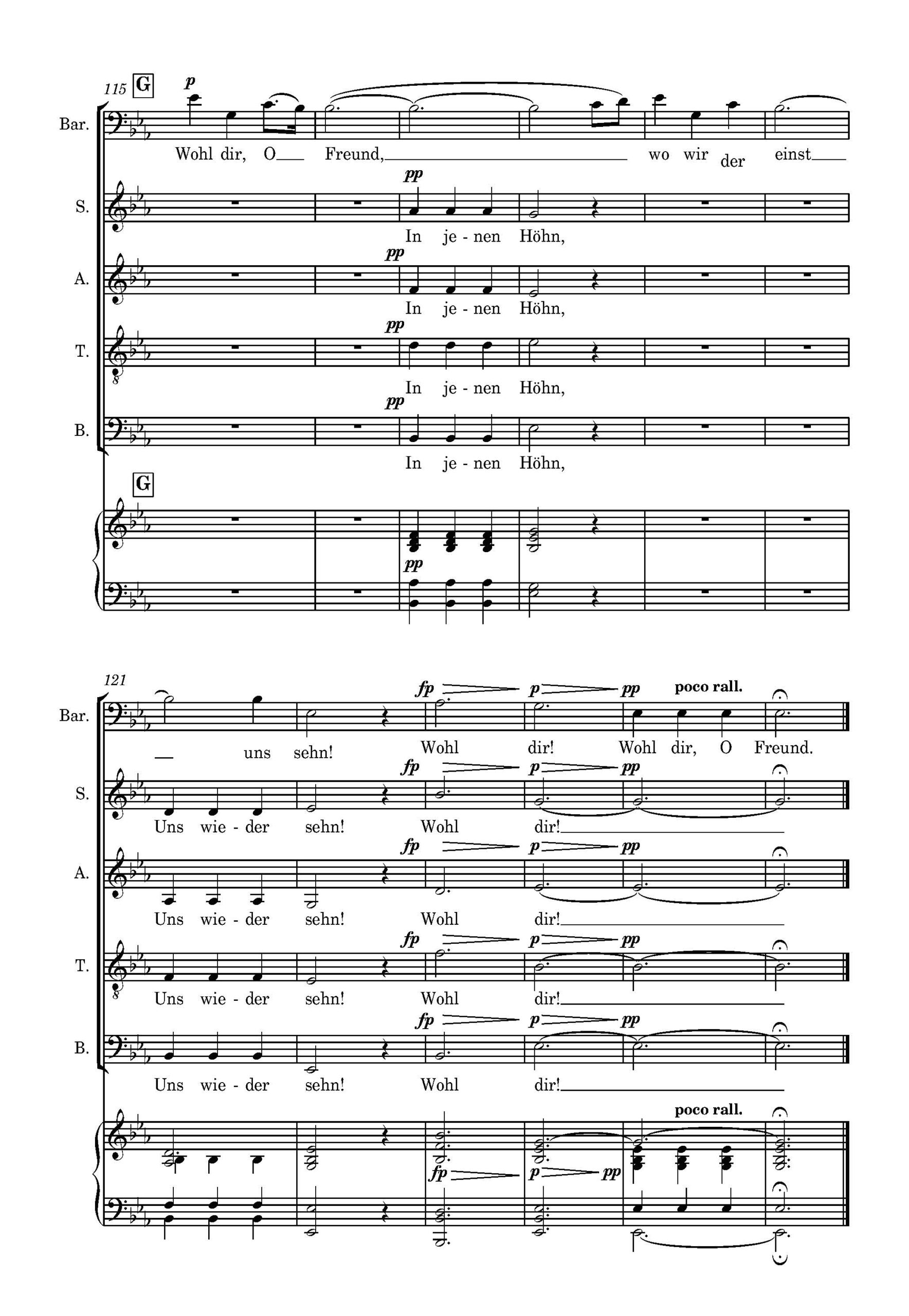
Wohl dir, O Freund, In Jenen Höhn, Wo wie der einst uns sehn! Wohl dir! Whol dir, O Freund. Wo wie der einst uns sehn! Wohl dir! Wohl dir, O Freund.
Sample Pages