
Charles Villiers Stanford
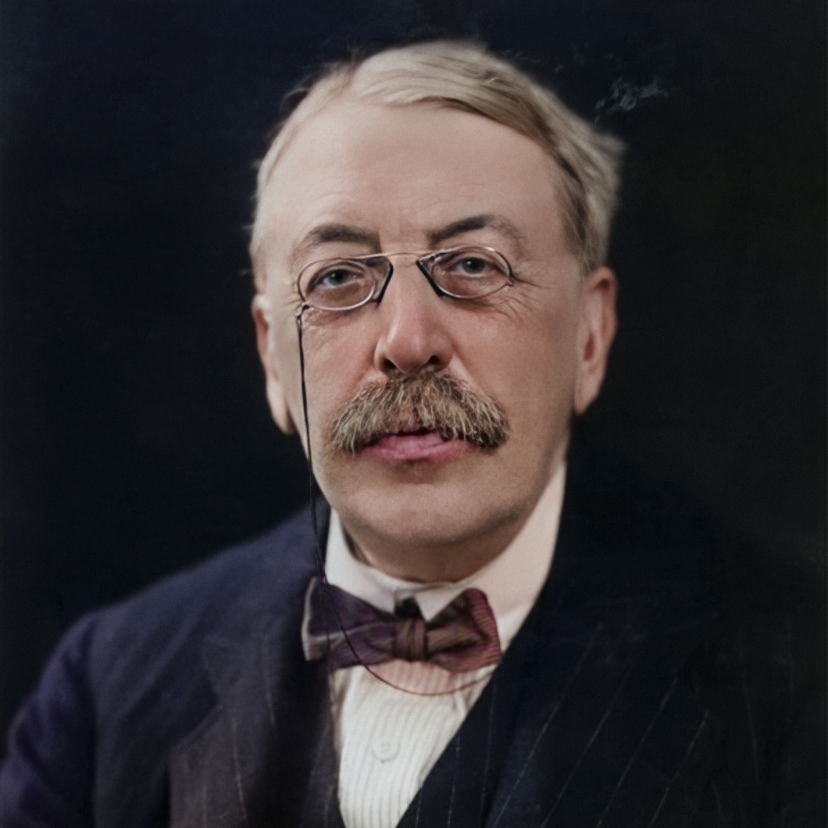
Charles Villiers Stanford was born in Dublin in 1852 and died in London in 1924. He went to Cambridge in 1870, where he was a choral scholar, organist, conductor and classics student. Between 1874 and 1876, he studied composition in Leipzig and Berlin, and was later twice awarded the Degree of D. Mus., by the University of Oxford in 1883 and by Cambridge in 1888. He became Professor of Music at Cambridge in 1887 and Professor of Composition at the the Royal College of Music, where he also conducted orchestral and opera classes. Stanford was director of the Leeds Festival and conducted the London Bach Choir.
Stanford is best known for his choral music and Anglican service-settings, but he was acknowledged as a remarkable teacher of composition. Among his pupils were Vaughan-Williams, Holst, Ireland, Bridge, Bliss and Howells. He himself would probably have wished to be remembered for his instrumental music, both chamber and orchestral, but his standing with the musical establishment was affected by his long-running feud with Elgar and other quarrelsome encounters. The influence of Brahms can be heard in some of Stanford’s chamber music, including parts of the Serenade-Nonet.