
Johann Wilhelm Hertel
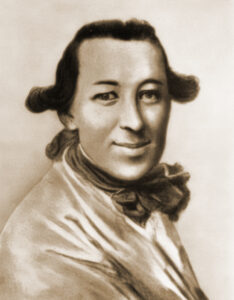
Johann Wilhelm Hertel was born in Eisenach in 1727 and died in 1789. During his lifetime, major changes took place in compositional and performance styles, as European musicians moved from what we know as the Baroque era to the Classical. Hertel’s output belongs in the transitional period. The son of a professional musician, he was originally destined for a career in law or theology. He was first taught music by Bach’s pupil J.H. Heil, and performed as a concert harpsichordist. He was also taught the violin and in 1744 joined his father as a court musician at Strelitz. That group of musicians was disbanded and in 1754, Hertel moved to Schwerin. He also took over responsibility for church music at Stralsund and was secretary and privy councillor to Princess Ulrike. Towards the end of his life, he performed less but continued to compose, to arrange concerts and to teach.
Although both Strelitz and Schwerin were provincial courts, Hertel was in touch with the leading musicians of the day, based in Berlin, such as F. and G. Benda and C.P.E. Bach. Hertel was taught composition by C.H. Graun and violin by F. Benda, who considered him a star pupil. His many violin concertos are particularly impressive, as is his church music. In his keyboard concertos, he shows inventiveness and passage-work ranking alongside that of C.P.E. Bach. Hertel’s symphonies are also important, but his most outstanding contribution is his vocal music, both sacred and secular, though little of it was published or known outside Schwerin. In it one can detect an affinity with, among others, C.P.E. Bach and Telemann.
Hertel: Concerto in E flat – Full Score and Parts– – – – –
Hertel: Concerto in E flat – Bassoon and Piano Reduction– – – – –