7 Pieces for Two Flutes
Contents
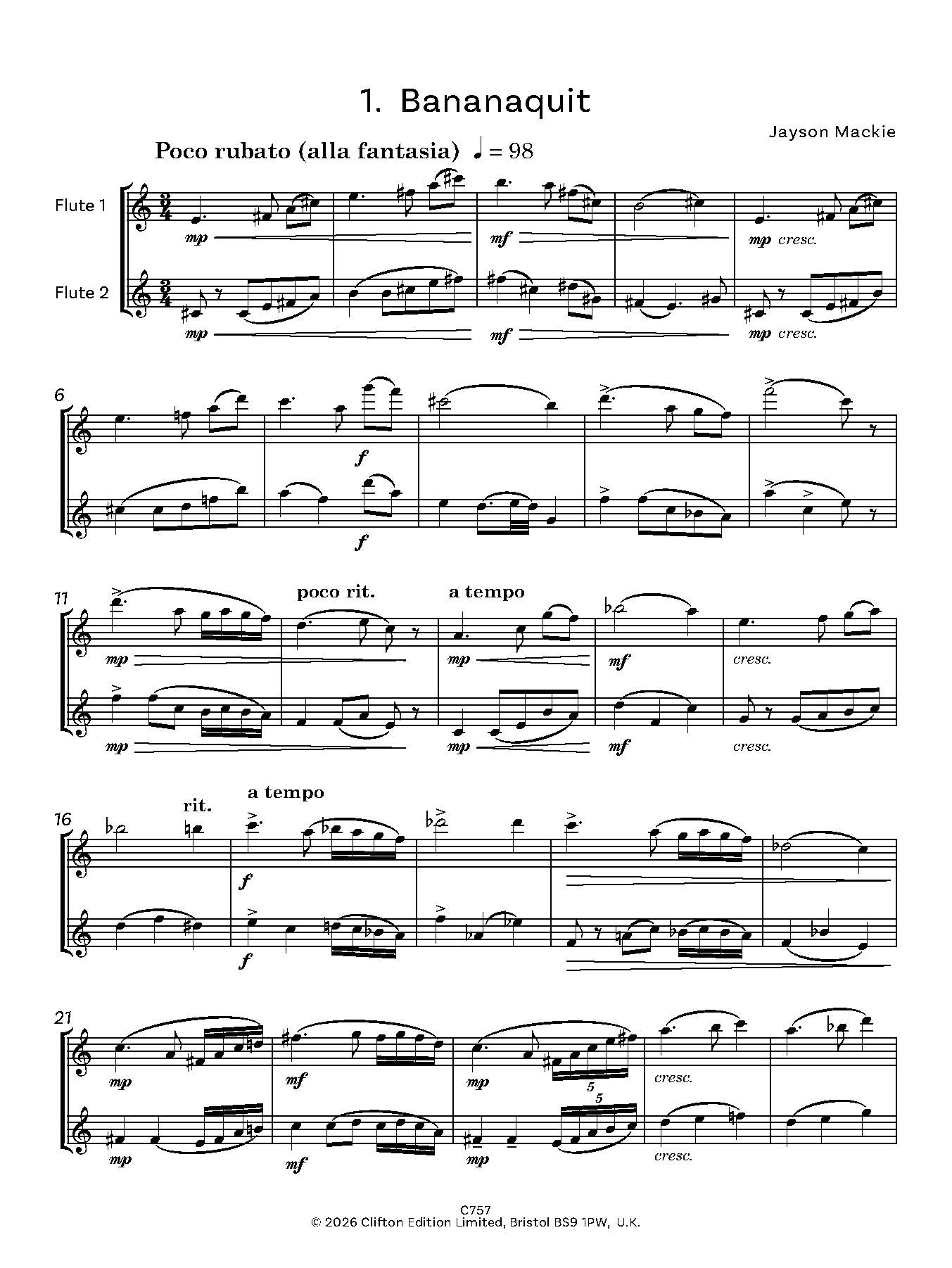
- Bananaquit — The opening prelude to the suite depicts the tame and sweet characteristics of this bird in the form of a gently swaying mini fantasia. Play this with an extremely rich and cantabile legato tone.
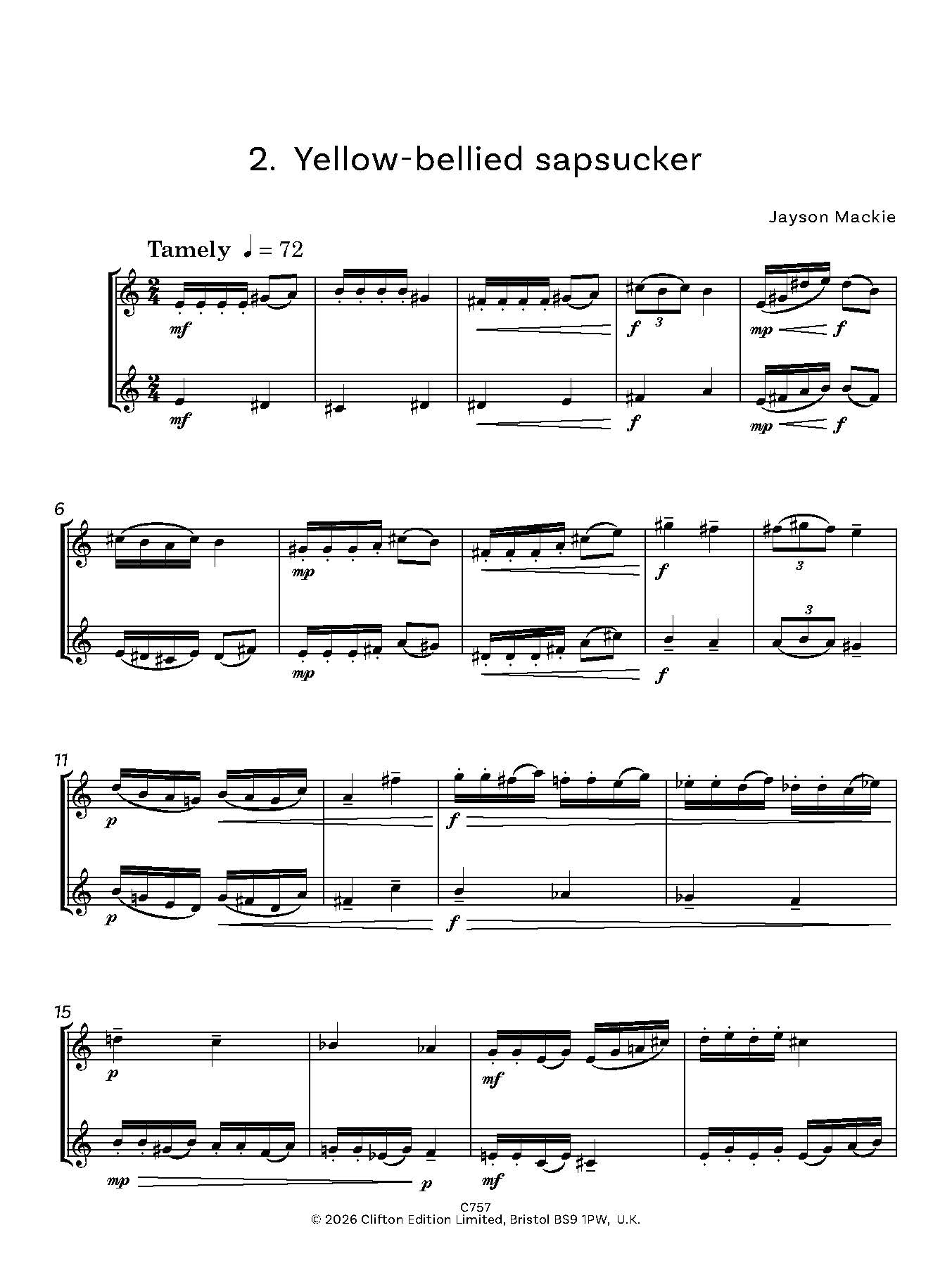
- Yellow-bellied sapsucker — These birds display drills and percussive repeated notes in their song calls. Combine a soft, but precise staccato and a contrasting velvetty legato.
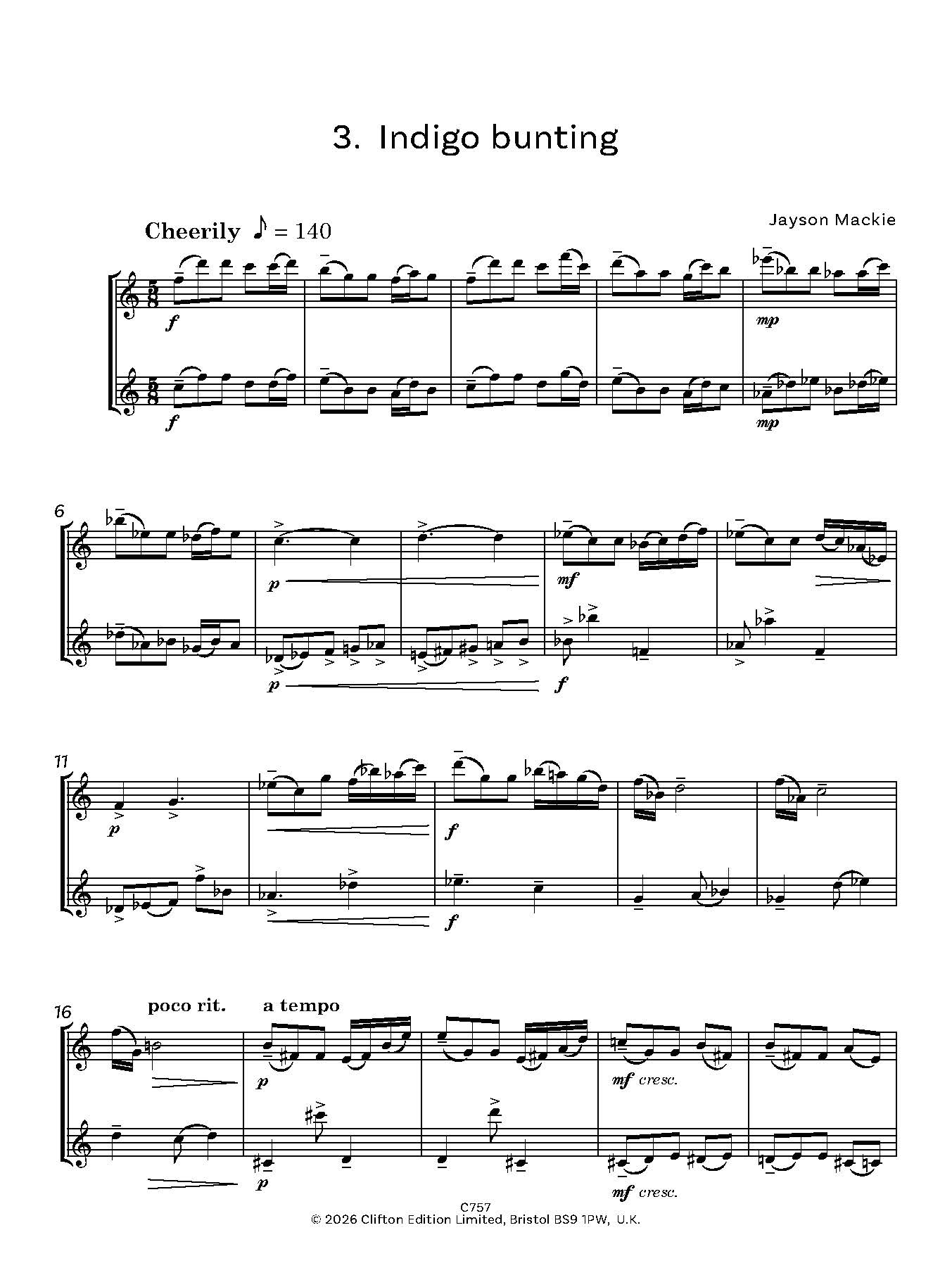
- Indigo bunting — The indigo bunting sings high pitched, more complex songs. A good introduction to irregular metres of 5/8 and 7/8. The 5/8 is a three and two grouping. Gently stress the first beat of each bar.
- Blue-tailed emerald — A pleasant twitterer of a bird with beautiful plumage as its name suggests. Keep articulation light, but precise ensuring that accented notes stand out.
- Green-throated carib — This movement is a mini tone poem mysteriously depicting this bird in a dense and sultry rain forest. Make the most of the trills as well as clearly contrasting all the varying articulations of light staccato and lush, legato note groupings.
- Saffron finch — This bird displays a pleasant, but repetitive song. Exaggerate the varying articulation and dynamics whilst using a rich cantabile tone in the lyrical sections which travel through various keys.
- Cuban parrot — The final movement of the suite is a depiction of a brightly coloured, ostentatious parrot giving us a taste of Cuba in the form of a catchy salsa encore. Contrast the sections containing the driving, rhythmic groove with the more lyrical phrases which move through a variety of jazz chord progressions.
Listen to audio samples
A short excerpt from 4. Blue tailed emerald
A short excerpt from 7. Cuban parrot
Sample Pages