The name of Max Bruch (1838–1920) is associated above all with his Violin Concerto No. 1 in G minor, Op. 26, composed in 1866. Standing alongside the great violin concertos of Beethoven, Mendelssohn and their contemporaries, it has become one of the best-loved works in the violin repertoire. Although Bruch composed more than 200 works, only the First Violin Concerto and the Scottish Fantasy for violin and orchestra (1880) have achieved comparable and lasting popularity.
The Romanze for viola and symphony orchestra, Op. 85, belongs to a group of works featuring the viola that Bruch composed between 1909 and 1911. These include the Eight Pieces for clarinet, viola and piano, Op. 83 (1909), and the Double Concerto for clarinet, viola and orchestra, Op. 88 (1911). The full scores, orchestral parts and piano reductions—the latter prepared by the composer—were published by Schott in Mainz in 1911 and proofread by Bruch himself.
The Romanze was dedicated to the distinguished French violist Maurice Vieux (1884–1951), whose teaching at the Paris Conservatoire exerted a profound influence on the development of viola playing in France. By the time Bruch composed the work, the shared musical language of nineteenth-century Romanticism was beginning to fragment. On 3 April 1911, Jean Sibelius conducted the première of his austere and dissonant Fourth Symphony in Helsinki; on 13 June of the same year, Stravinsky’s ballet Petrushka received its première at the Théâtre du Châtelet in Paris. Bruch, then aged seventy-three, remained steadfastly committed to his own lyrical Romantic idiom until his death on 2 October 1920. His gravestone bears the words Musik ist die Sprache Gottes—“Music is the language of God”.
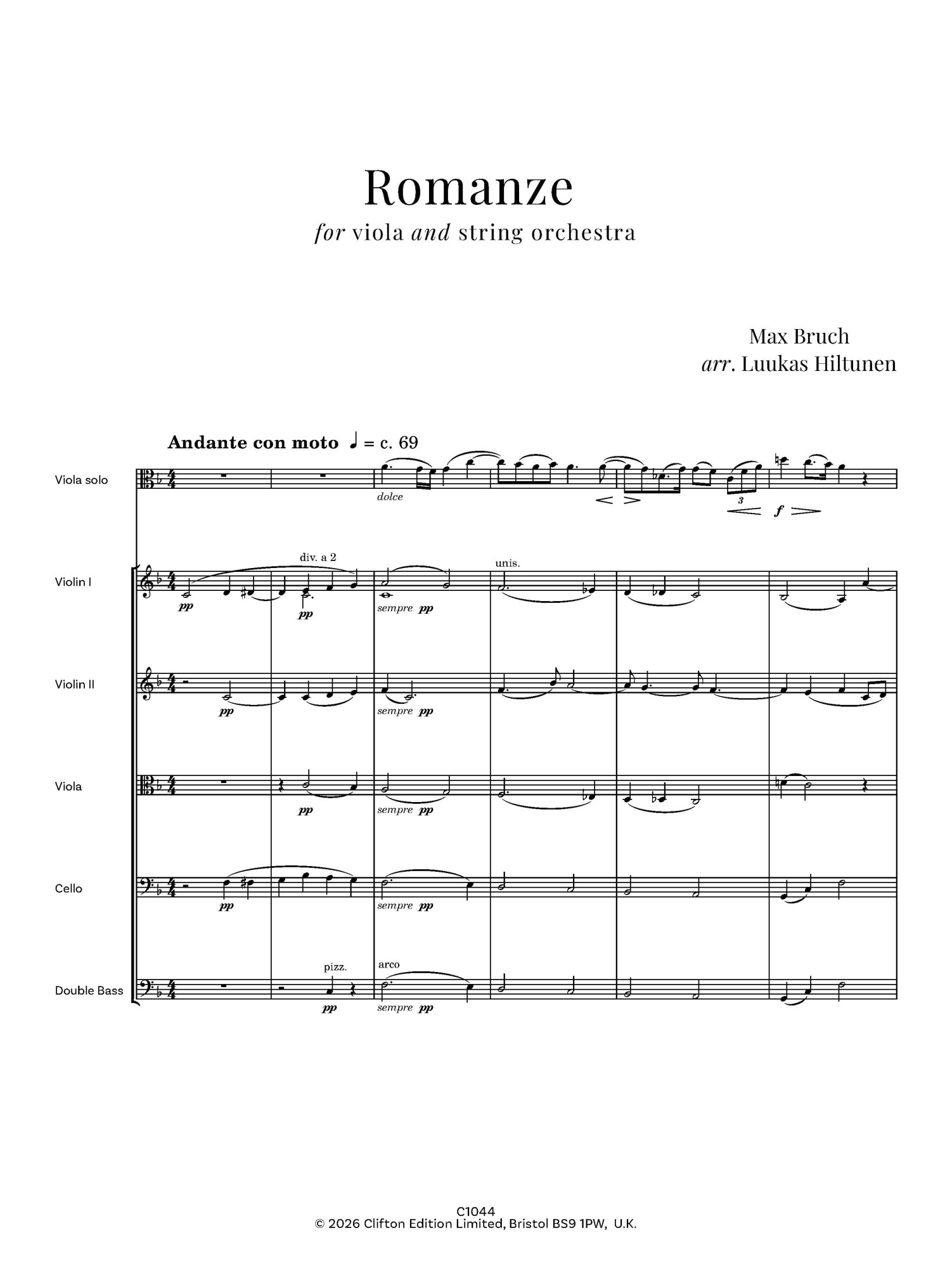
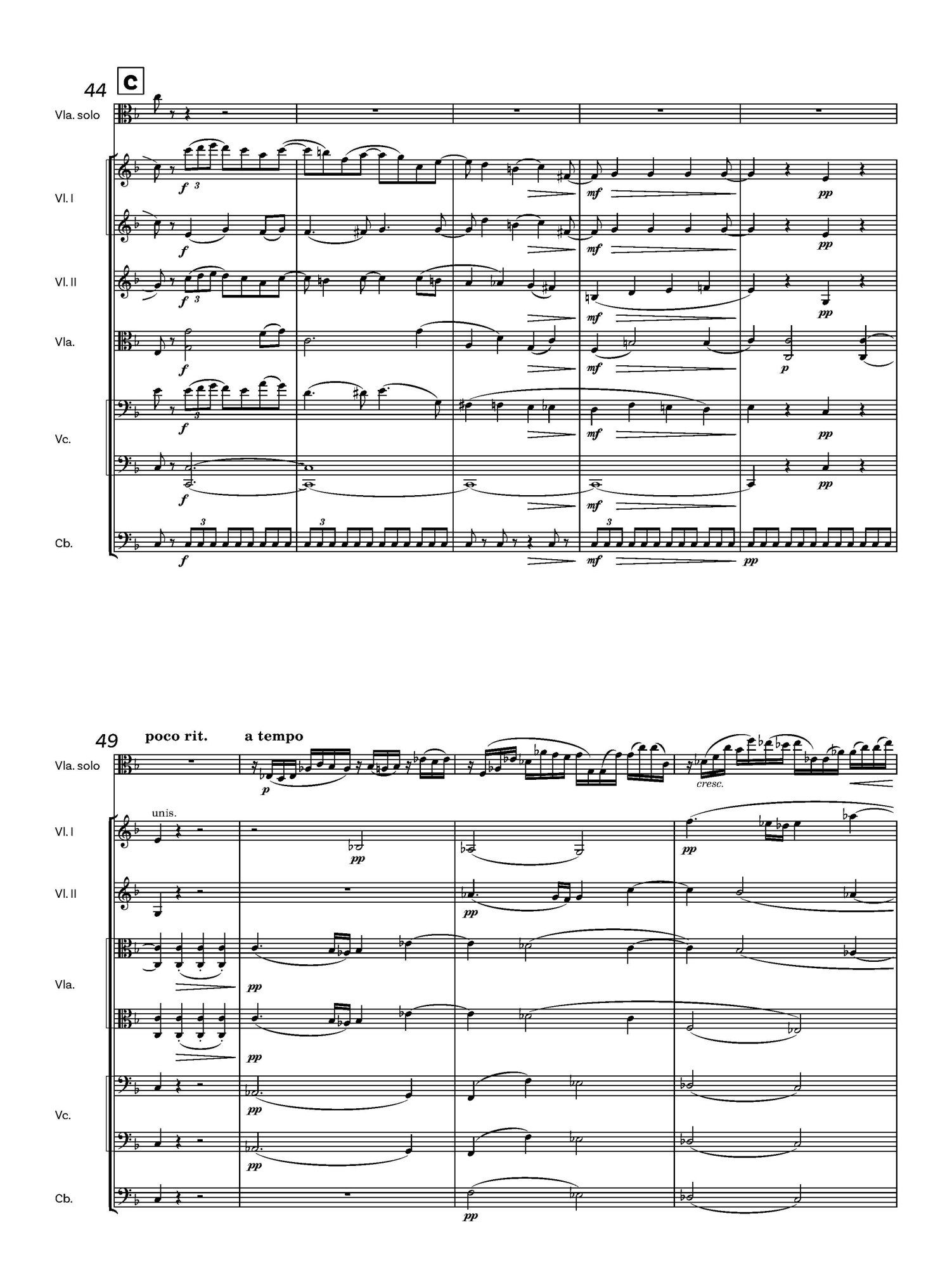
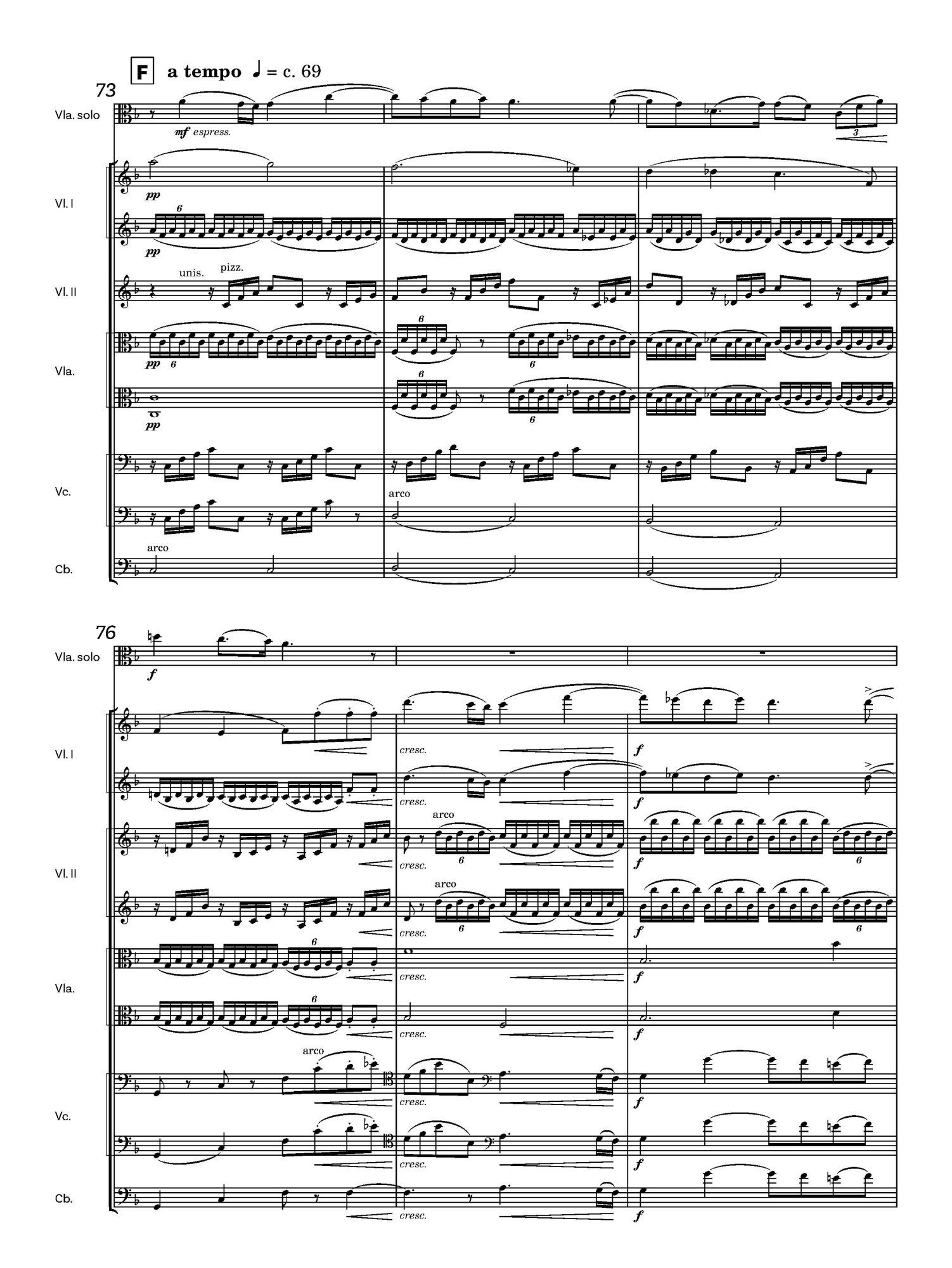
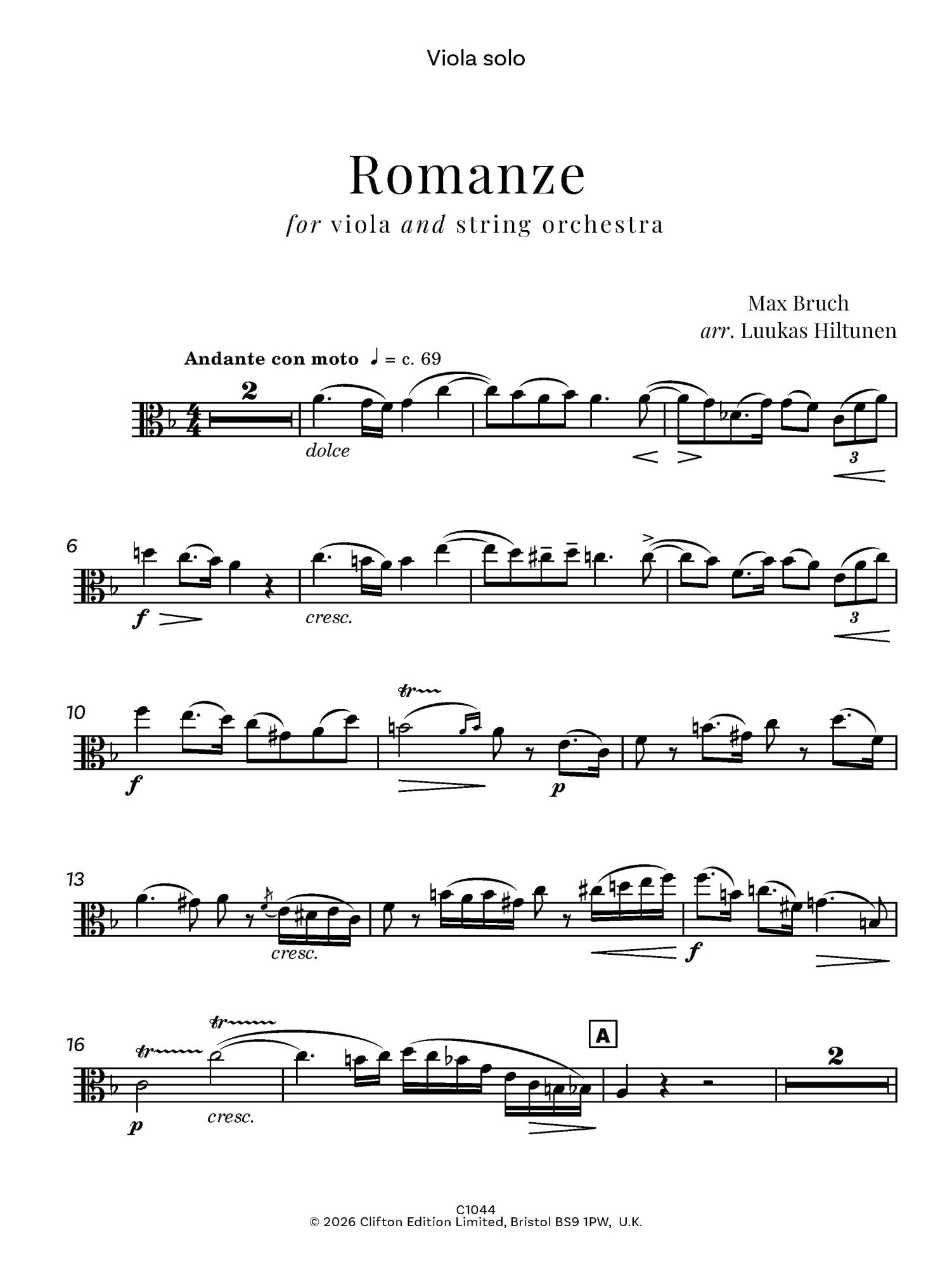
This arrangement of the Romanze for viola and string orchestra draws upon both Bruch’s original version for viola and symphony orchestra and his own reduction for viola and piano. To preserve the work’s tonal character and emotional substance as faithfully as possible, the original orchestration has been examined in considerable detail. Its most important accompanimental elements have been redistributed amongst the strings, making use of divided writing and the varied colours available within each section. Although particularly rich results may be achieved with a large string complement—such as 12.10.8.6.3—the arrangement is equally suitable for smaller ensembles.
The origins of this arrangement date back to the spring of 2019, when the Lahti Conservatory commissioned me to prepare reduced versions for harp and string orchestra of Jules Massenet’s Méditation from Thaïs and Pietro Mascagni’s Intermezzo from Cavalleria rusticana. Both arrangements were completed that year and received their world premières on 12 February 2020; they were subsequently published by Clifton Edition in July 2026.
Independently of that commission, and prompted by my own affection for the work, I also undertook this arrangement of Bruch’s Romanze. I had previously performed the piece on several occasions at the Lahti Conservatory with the pianist Maarit Liimatainen. That close familiarity—gained both as a performer and as a composer—proved invaluable, enabling me to complete the arrangement within only a few weeks.
Luukas Hiltunen
Helsinki, August 2026
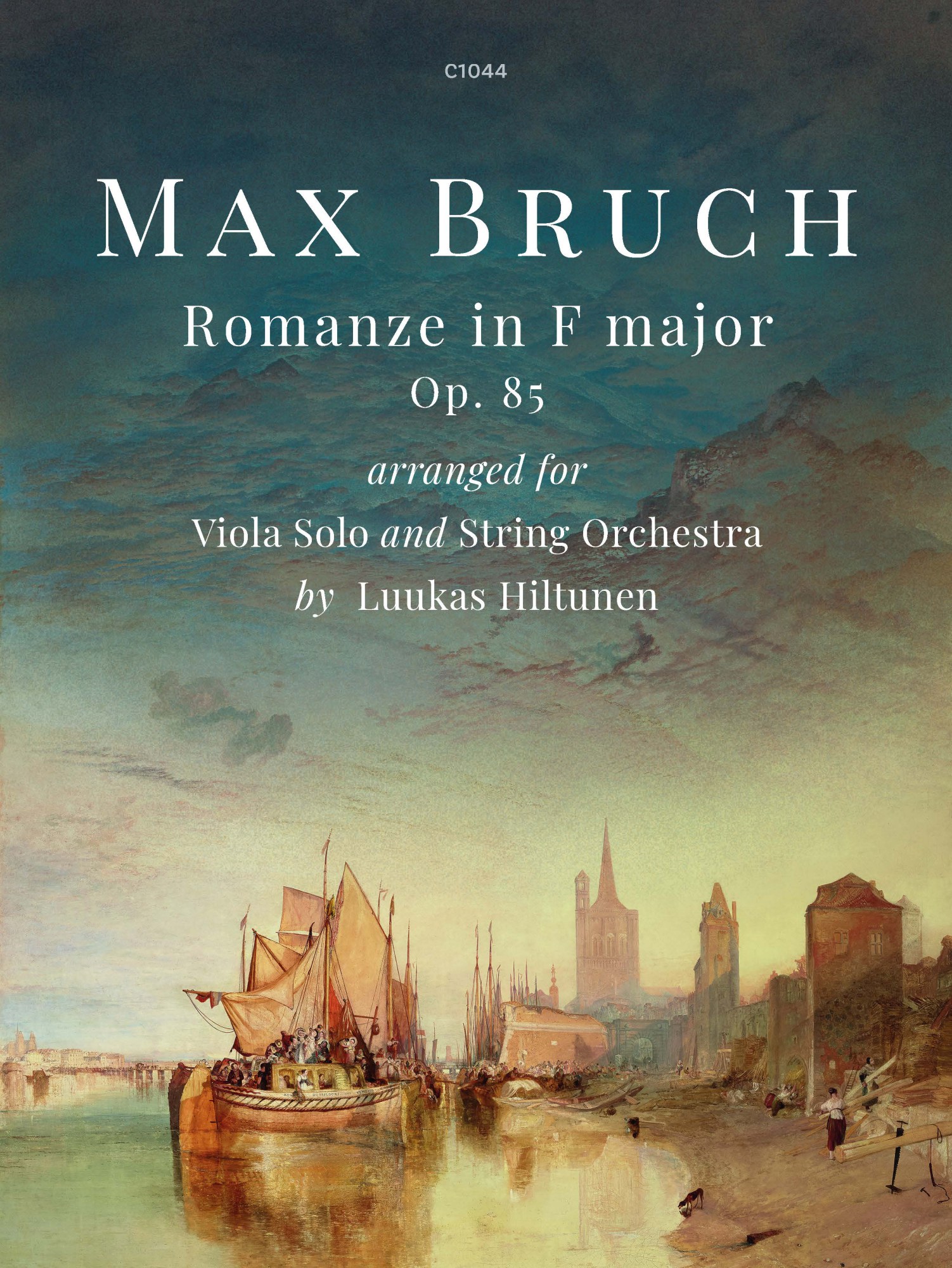
Front cover design features J. M. W. Turner's 1826 oil painting: "Cologne, the Arrival of a Packet Boat in the Evening"
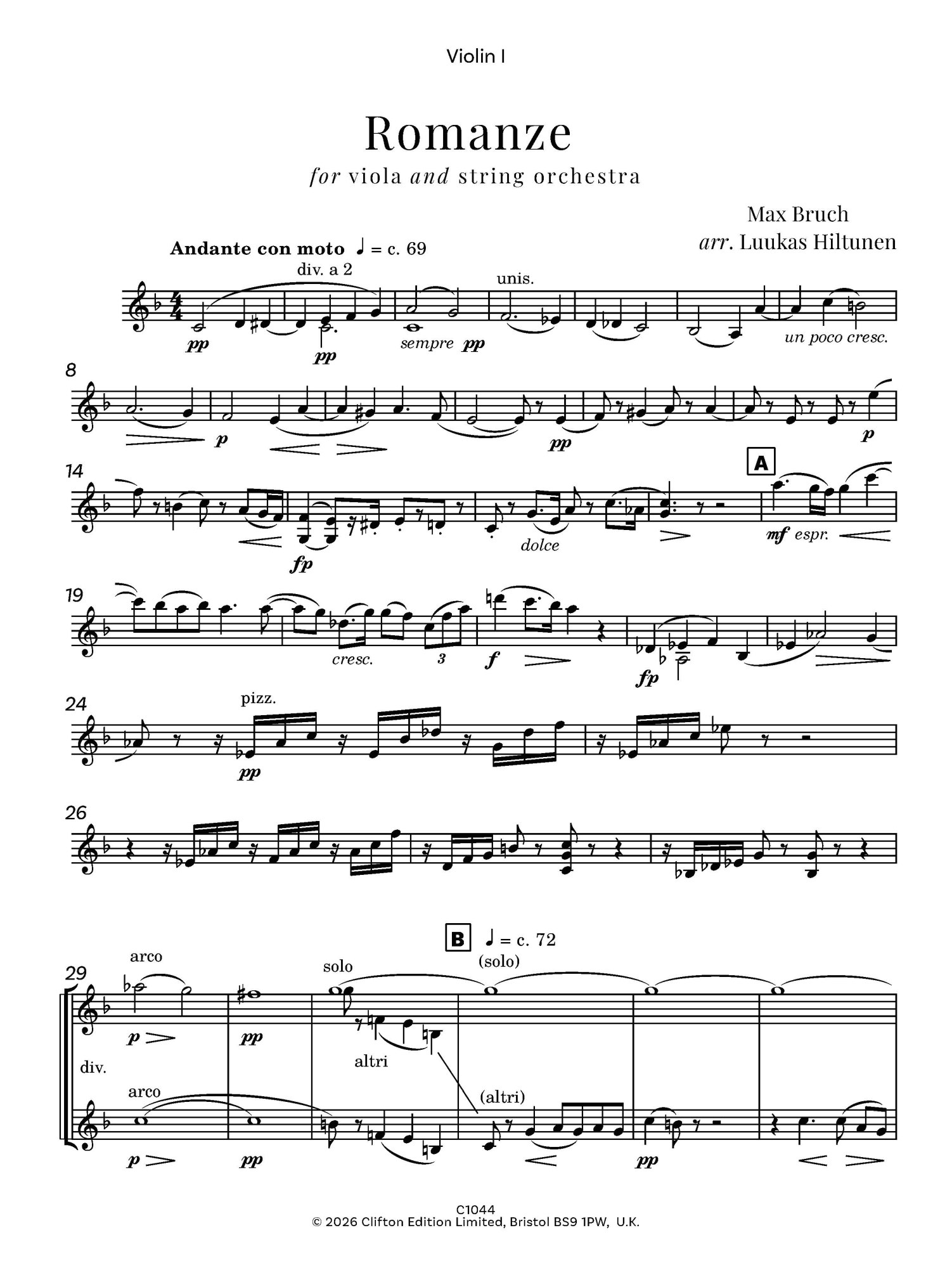
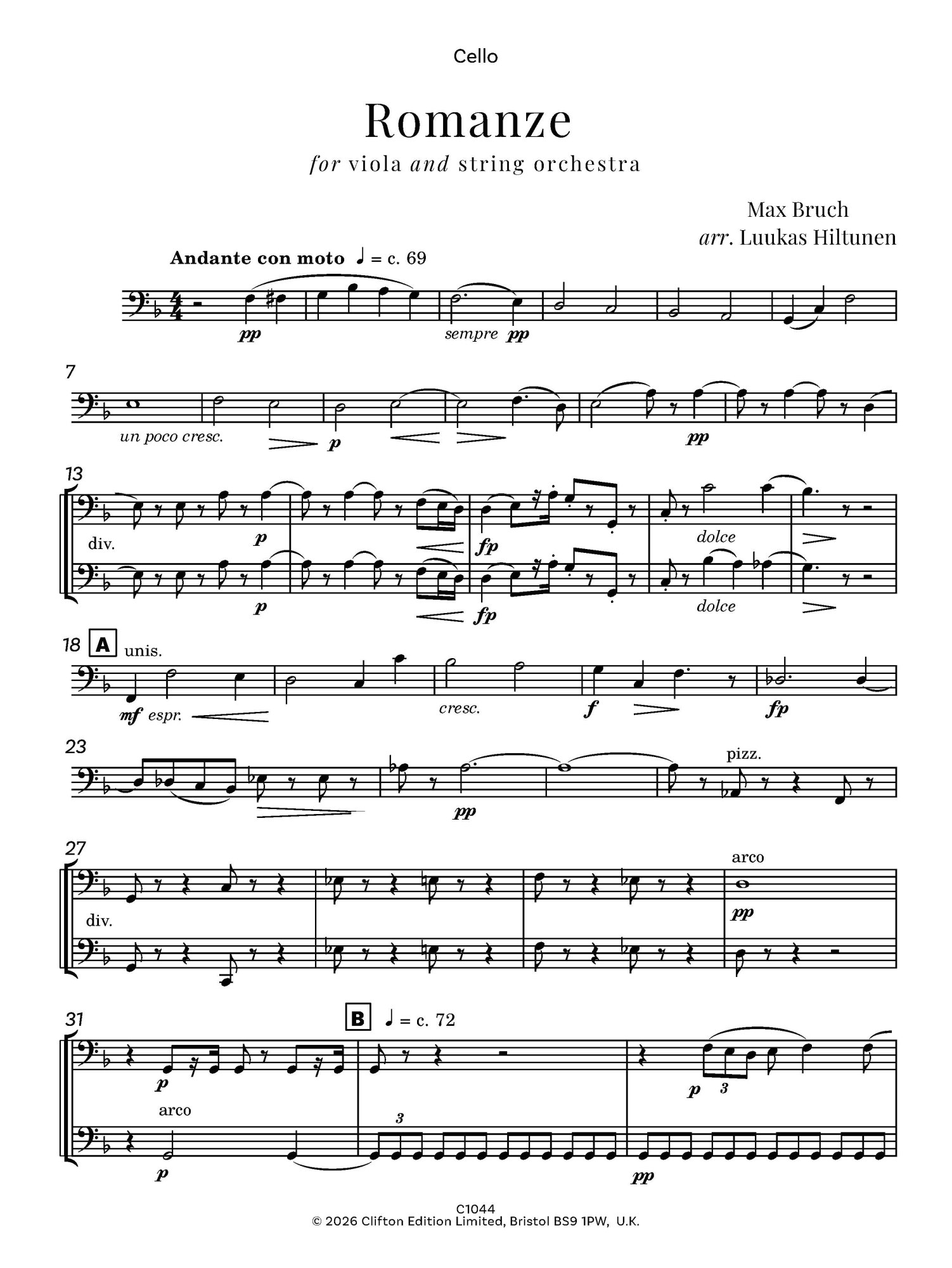
Sample Pages