Italian composer Pietro Mascagni (1863–1945), the son of a baker, wrote his first opera at the age of thirteen. In 1882, aged nineteen, he was admitted to the Milan Conservatory, where he studied for two years under Amilcare Ponchielli (1834–1886) and Michele Saladino (1835–1912). After leaving the Conservatory, he worked as a conductor with a number of touring opera companies while also serving as a double bassist at the Teatro Dal Verme in Milan.
In 1889, Mascagni happened to notice an announcement from the Milanese music publisher Sonzogno inviting entries for a competition to compose a one-act opera. Over the following months, he wrote Cavalleria rusticana at remarkable speed. This verismo masterpiece, set in rural Sicily, won First Prize (shared with two other composers) and launched Mascagni to international fame almost overnight. Its immediate success owed much to its compelling dramatic power, combined with an abundance of memorable and deeply expressive melodies that captivated audiences and critics alike.
Cavalleria rusticana quickly became one of the most celebrated works in the operatic repertoire. Many of its melodies soon escaped the theatre and entered popular musical culture, while the seamless relationship between drama and music ensured the work’s enduring appeal. By the time of Mascagni’s death on 2 August 1945, the opera had been performed more than 14,000 times in Italy alone.
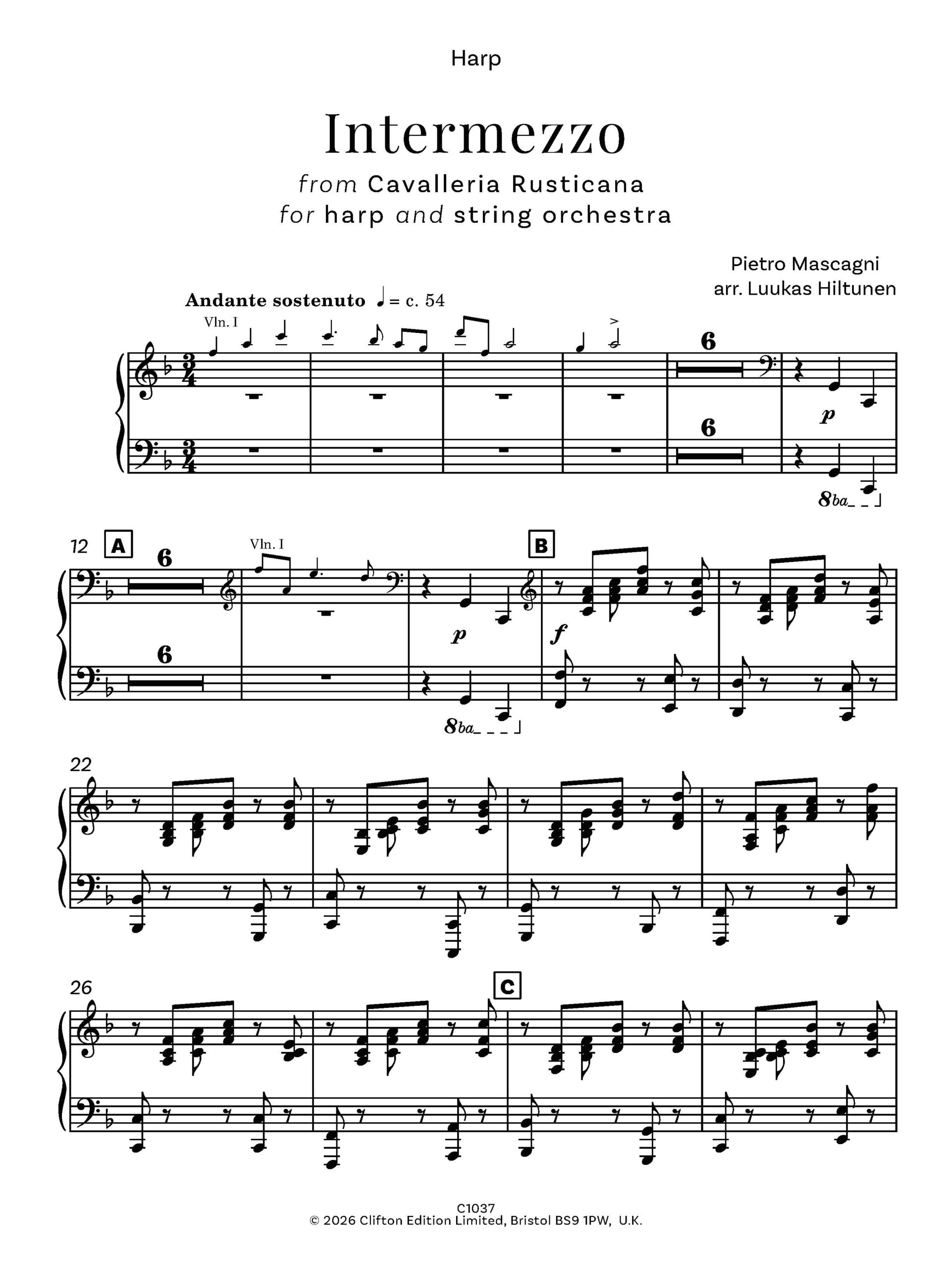
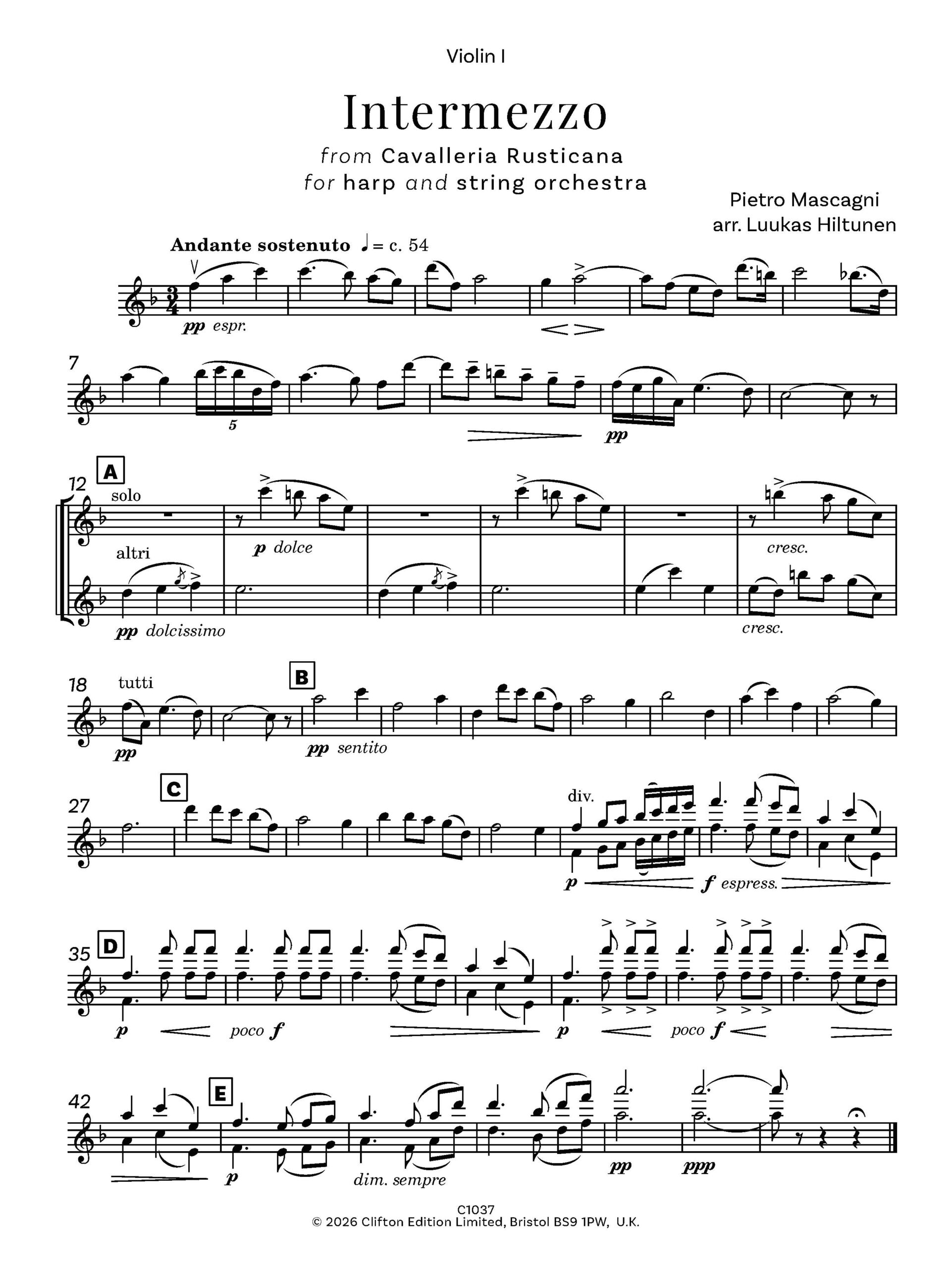
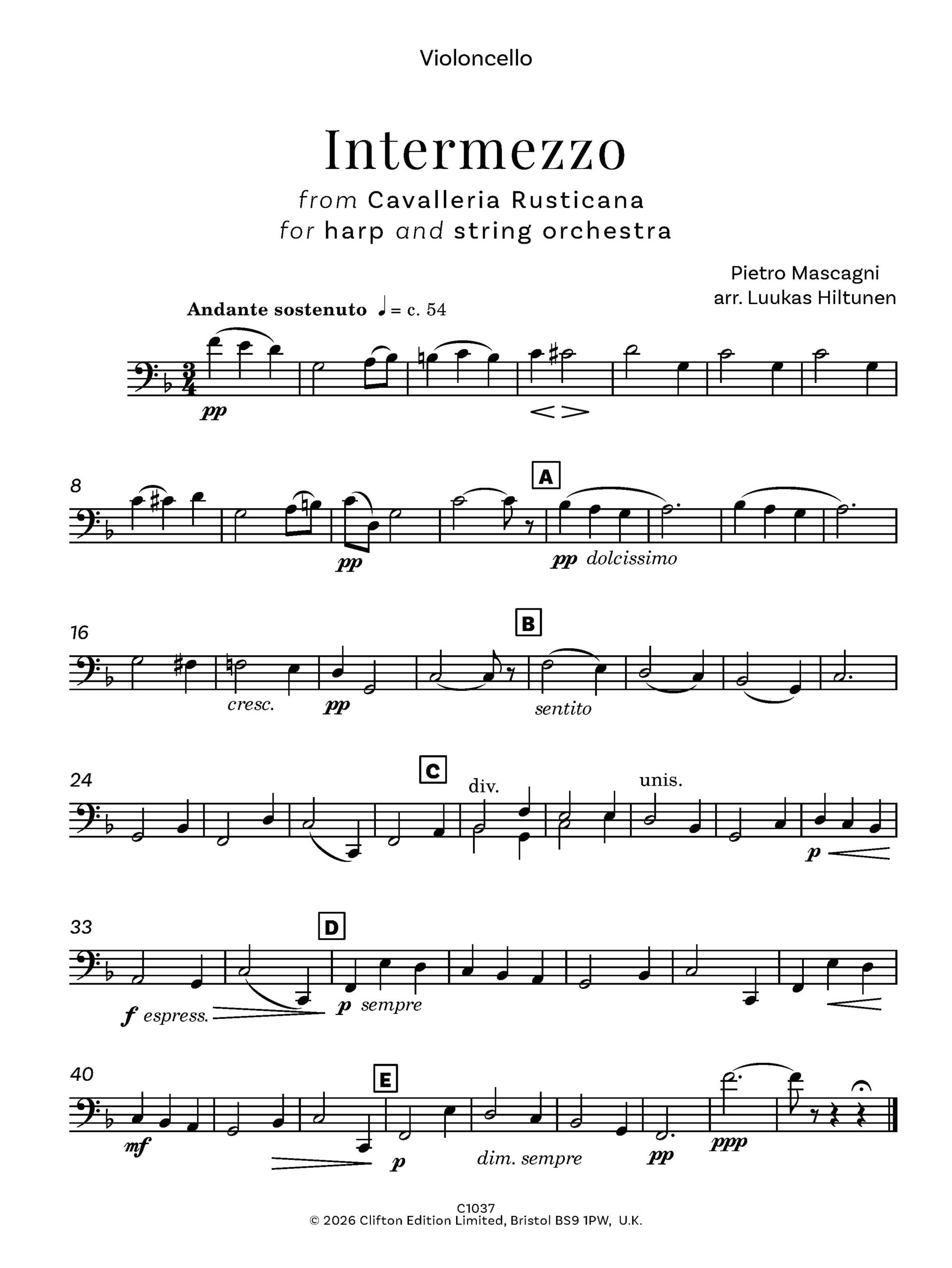
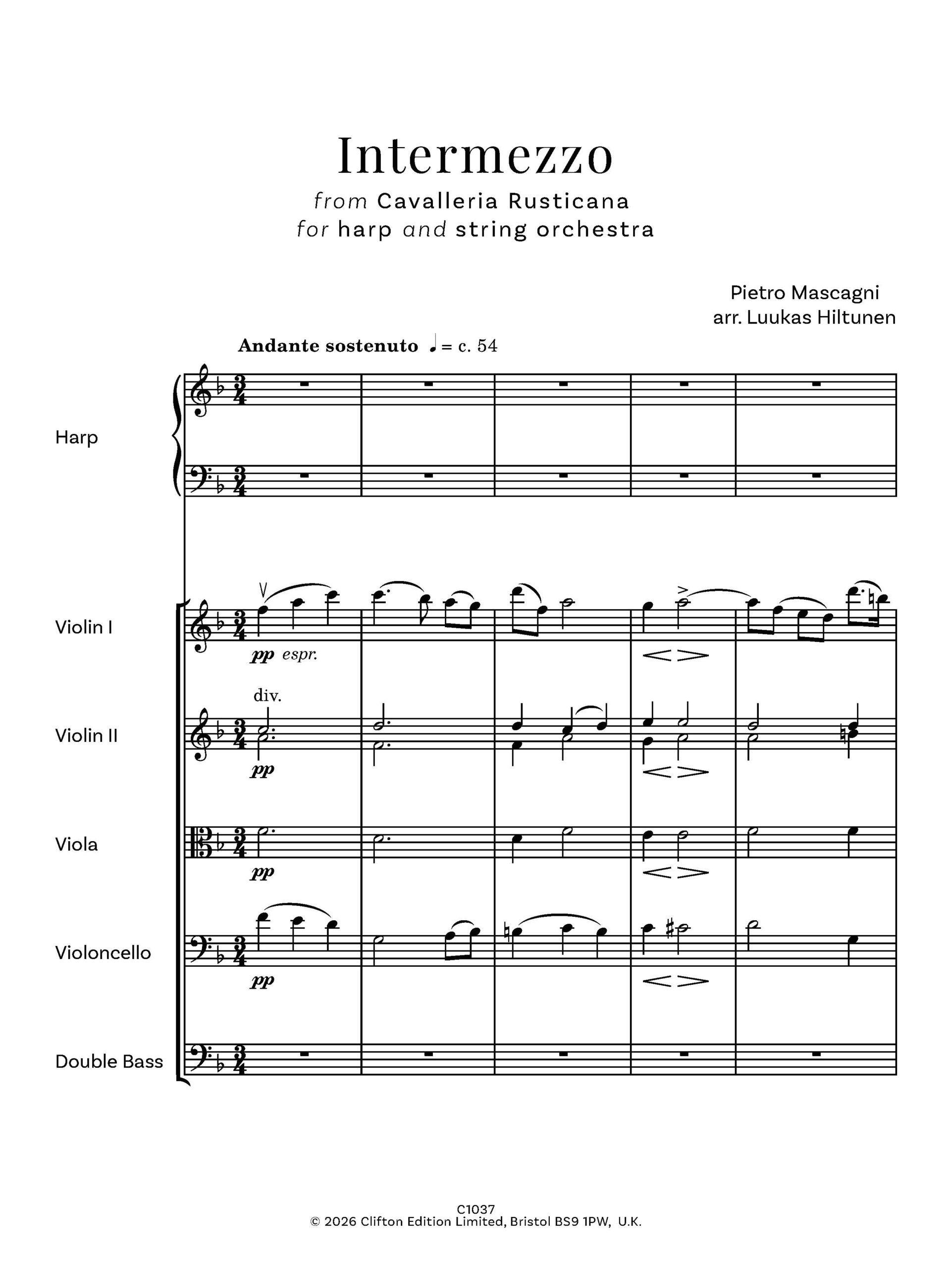
The hauntingly beautiful Intermezzo, the orchestral interlude preceding the drinking song and the opera’s dramatic final scene, has long enjoyed an independent life in the concert hall and has been arranged for many different instrumental combinations. This arrangement for harp and string orchestra, commissioned by the Lahti Conservatory in the spring of 2019, is based closely on Mascagni’s original orchestration, which calls for two harps and an off-stage organ. The première took place on 12 February 2020 in the Felix Krohn Hall of the Lahti Concert Hall, performed by the New Lahti Chamber Orchestra conducted by Juhani Palola.
For practical reasons, the harp should be positioned centrally within the orchestra, between the first violins and violas, opposite the conductor’s podium, even when the performance is directed by the leader. The recommended minimum string complement is 10.8.6.4.2. To reflect modern performance practice, the arranger has provided an approximate metronome marking in place of Mascagni’s original verbal tempo indication. Depending on the size of the string orchestra, the harp part may also be doubled.
Luukas Hiltunen
Tampere
Front Cover Design: Carl Wünnenberg’s original Cavalleria Rusticana design (La_Mujer, 1900).
YouTube Video
Artists
Viena Jylhä-Ollila (harp)
New Lahti Chamber Orchestra
Juhani Palola (conductor)
Recorded at the concert (‘live’) on 12 February, 2020 at the Felix Krohn Hall, Lahti Concert House, Lahti, Finland (World Premiere Performance)