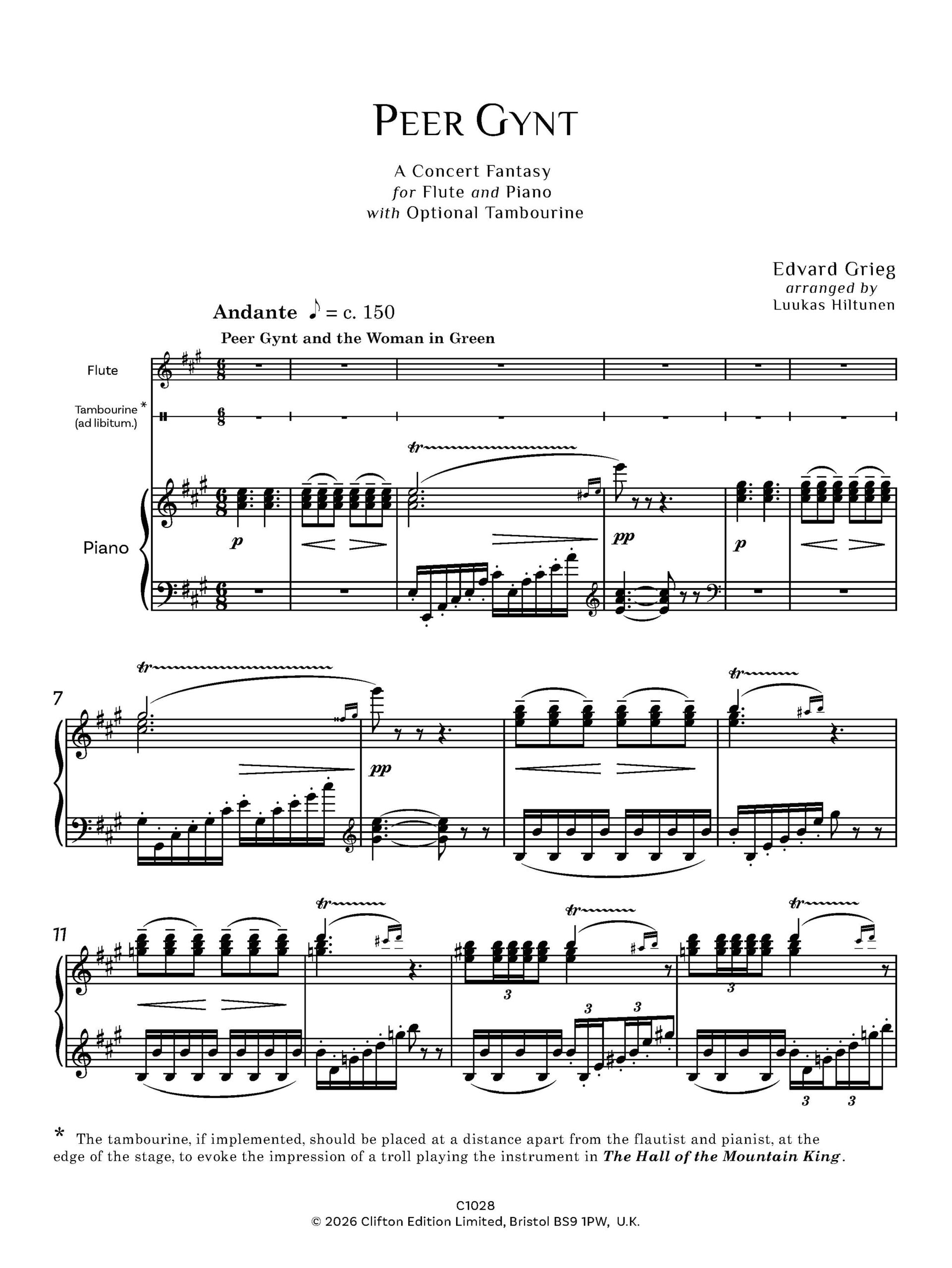
This Concert Fantasy for flute and piano, with optional tambourine, is based on Edvard Grieg’s incidental music to Henrik Ibsen’s Peer Gynt, Op. 23. Rather than following Peer himself as the central figure, it explores two contrasting female characters: the Daughter of the Mountain King, who first appears disguised as the Woman in Green, and Solveig, Peer’s faithful beloved. Peer remains the unifying presence in the background.
The structure of the work emerged only after the arrangement was complete, but it confirmed the project’s dramatic logic. Ingrid, the daughter of the Hæstad farmer, is omitted; instead, the focus falls on the encounter with the Daughter of the Mountain King and, later, on Solveig’s enduring presence.
Grieg’s music for Peer Gynt has been dear to me since early childhood. There is even a video of me, aged four, humming Solveig’s Song at the piano. Grieg’s musical language is therefore deeply familiar to me, and I have aimed to make the newly composed transitions sound as naturally “Grieg-like” as possible.
In shaping the paraphrase, Grieg’s music was more important than the plot itself, particularly the lesser-known numbers rarely heard outside the complete incidental music. The opening scene, Peer Gynt and the Woman in Green, was omitted from the first published edition of the incidental music in 1908 and appeared only in the 1988 Urtext edition edited by the Norwegian musicologist Finn Benestad. The Shipwreck scene, here abbreviated and adapted, was likewise preserved among Grieg’s manuscripts in the Grieg Archives at Bergen Public Library, donated by the composer in 1906.
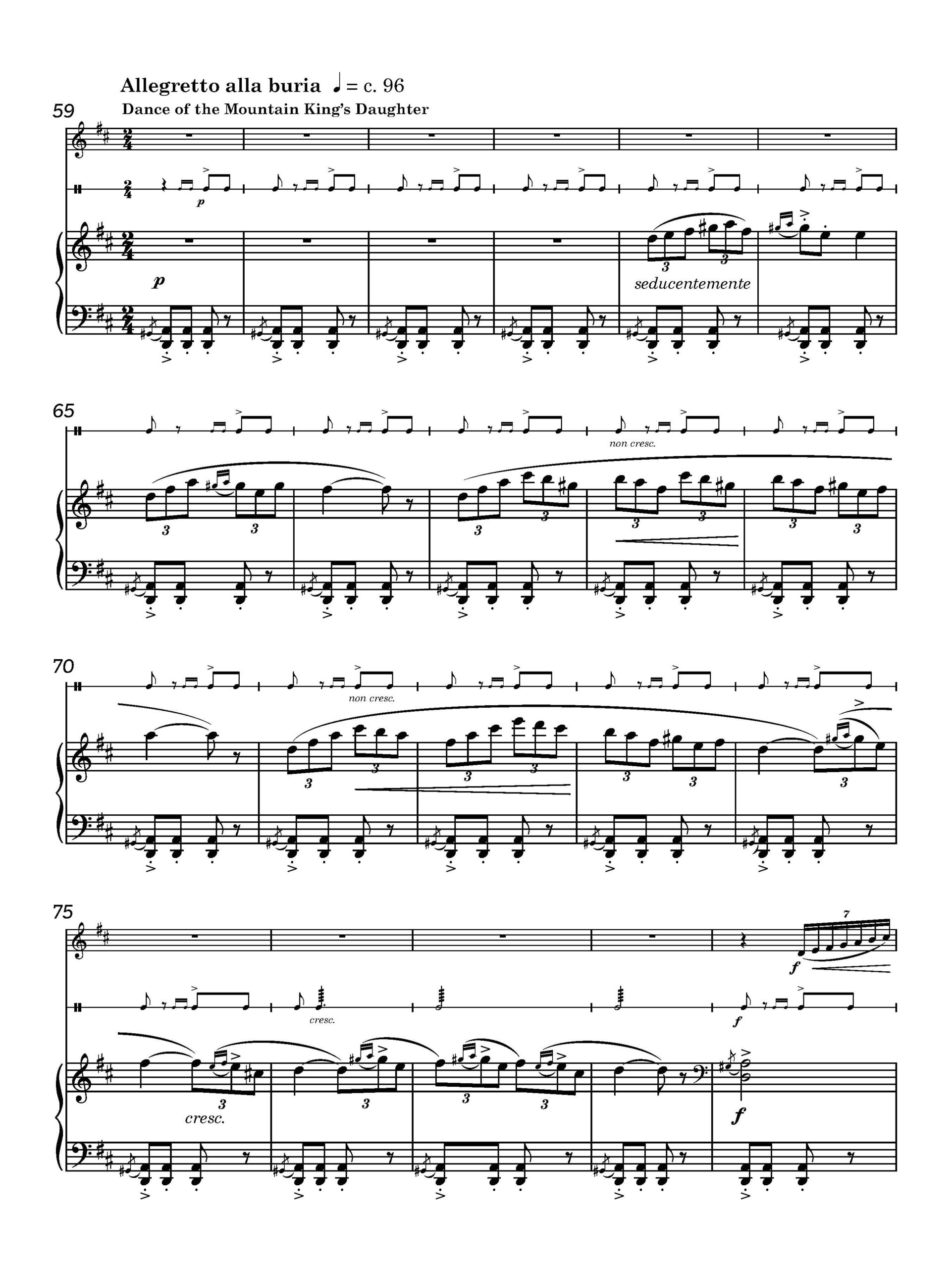
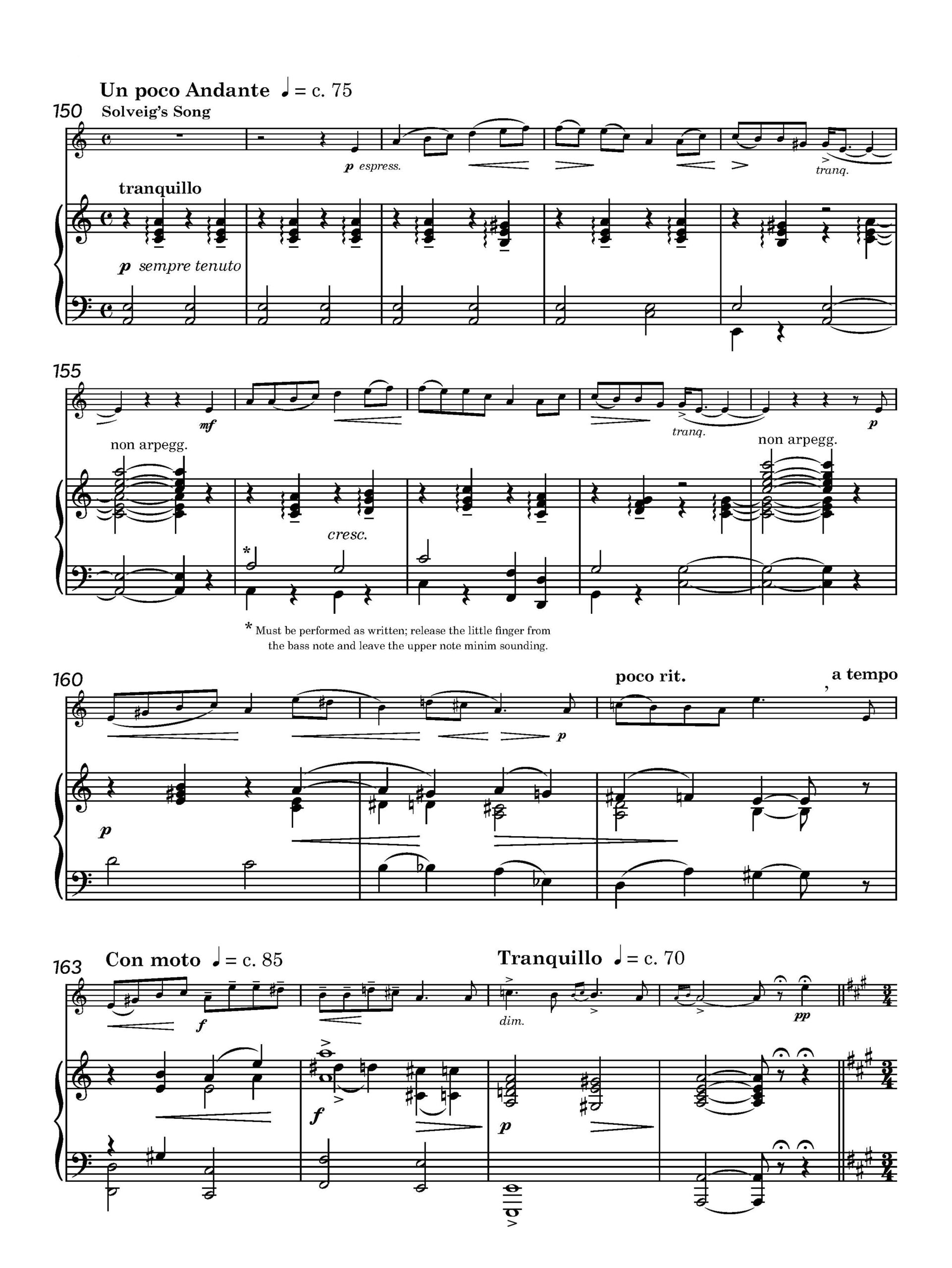
Solveig’s Song is included because of its familiarity, personal significance, and structural role. Placed at the centre of the paraphrase, between the energetic Dance of the Mountain King’s Daughter and the Shipwreck scene, it forms both a musical and dramatic watershed. The work then closes with the calm, dreamlike Solveig’s Lullaby. The piano reduction of the lullaby is based on Gustav Friedrich Kogel’s arrangement, published by C. F. Peters in 1919 as part of the piano score of the incidental music. In transcribing the vocal line for flute, I made a few minor interpretative changes, most notably raising the final fermata phrase by an octave.
The decision to omit the best-known numbers, such as Morning Mood, Anitra’s Dance, and Arabian Dance, was deliberate. These pieces already exist in many arrangements, and their inclusion would have made the whole less distinctive. Instead, the selected scenes give the paraphrase a coherent shape, framed by the piano at the beginning and end.
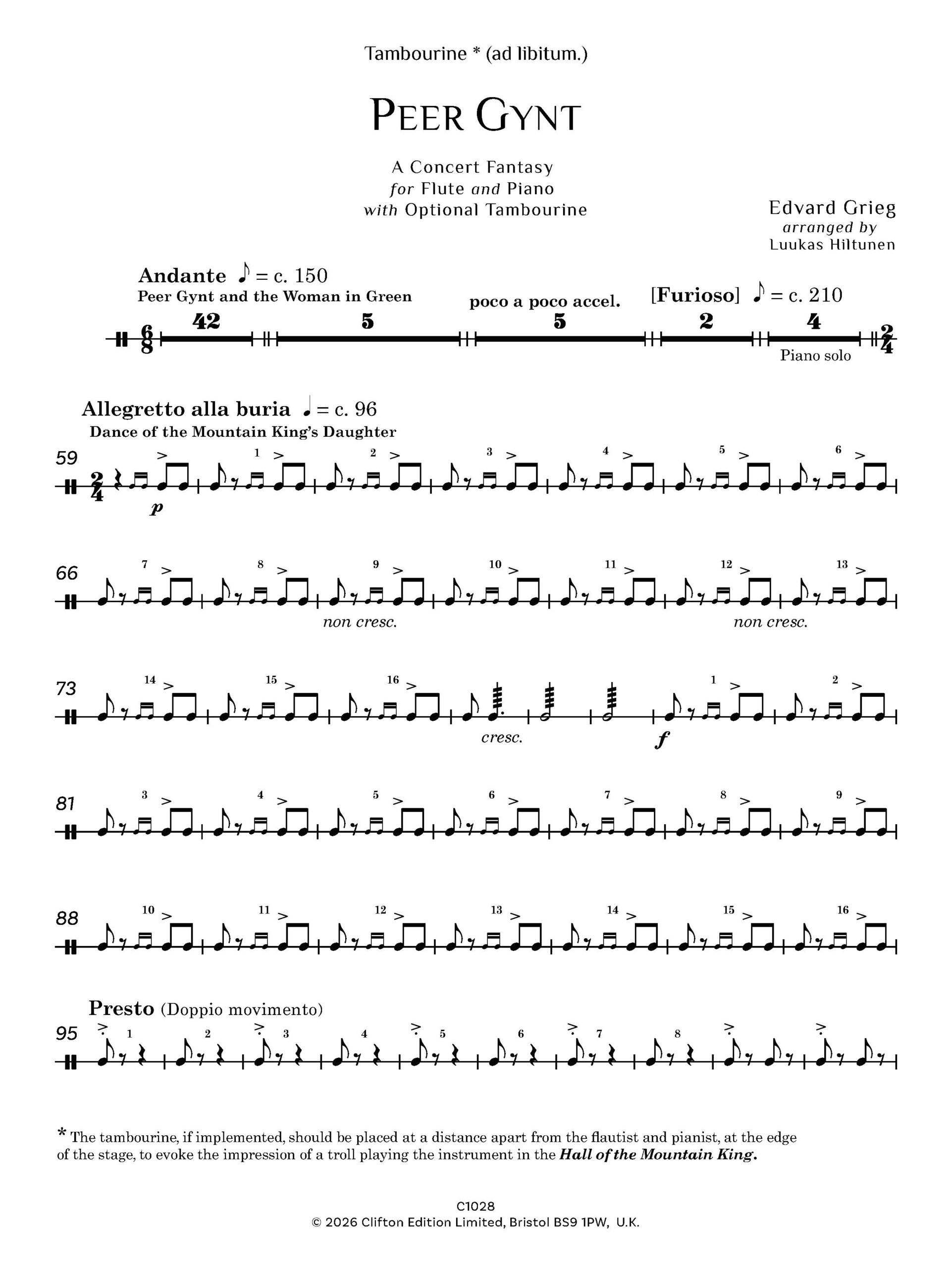
The optional tambourine was added after the first scene had been completed, while preparing the opening of Dance of the Mountain King’s Daughter. It adds colour, variety, and a touch of theatrical realism. Its brief reappearance in bars 183–188, before the Shipwreck scene, is also practical, allowing the player to contribute again rather than remain silent after the second scene.
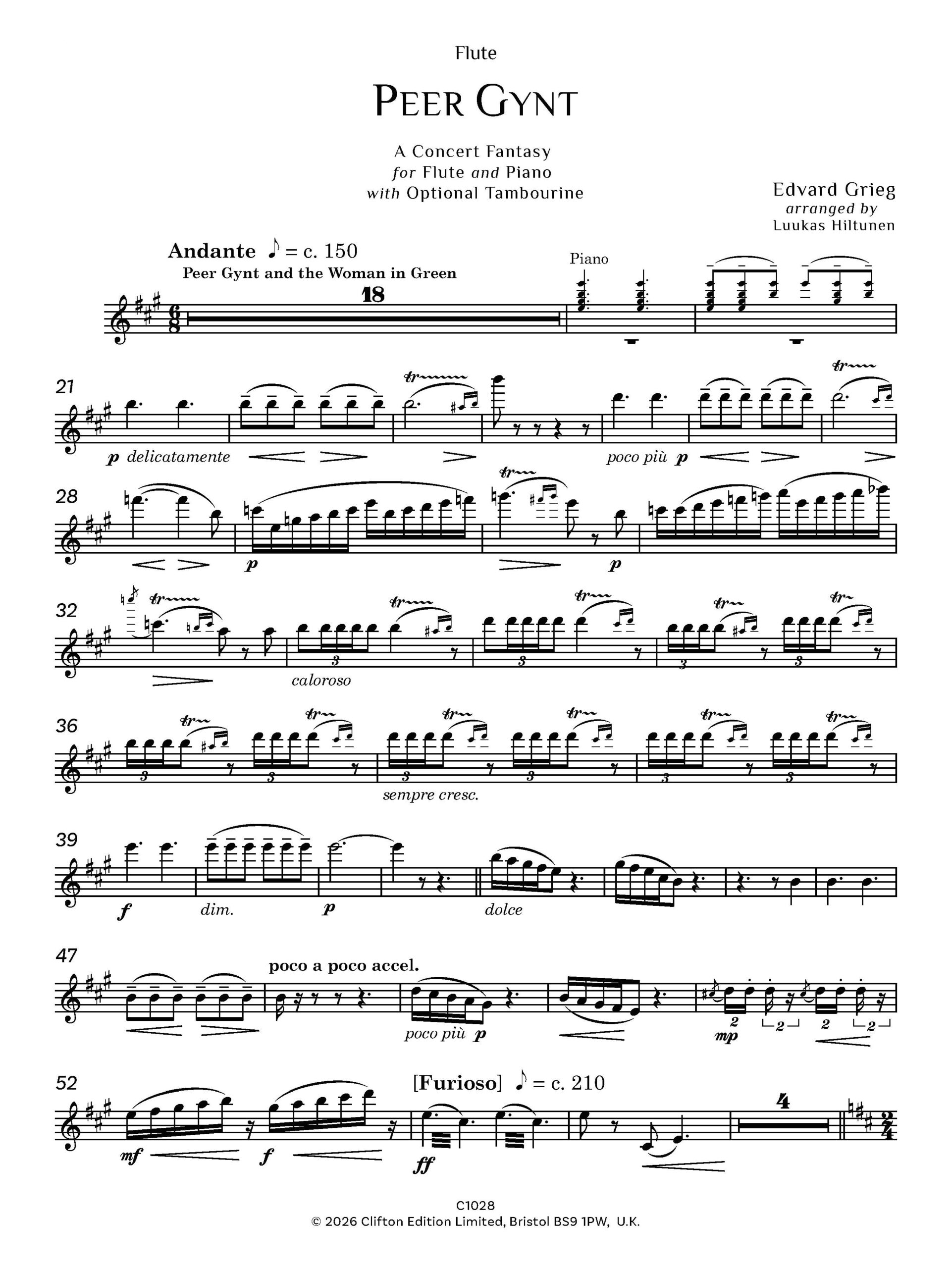
Some artistic liberties have been taken with Ibsen’s drama. In the first scene, the flute suggests the teasing, flirtatious character of the Daughter of the Mountain King in her guise as the Woman in Green. Grieg’s themes are extended in bars 23–32, with changes of key between four- and two-bar units; from bar 33 the music returns to Grieg’s own material, bringing the scene to a natural close before the transition to the next episode at bar 43.
Another important liberty occurs before the final scene, Solveig’s Lullaby, where the flute’s lingering solo suggests Solveig humming as she waits for Peer. This moment does not occur in Ibsen’s play, nor does Peer reach Solveig immediately after the shipwreck; in the drama he must first pass through the night forest and confront his past. In this paraphrase, however, the sequence is made more immediate: Peer, exhausted and near death, drifts ashore on a plank of wood and reaches Solveig’s house with his final strength. She gently leads him inside from the terrace and holds his soul in her arms for eternity.
Luukas Hiltunen
Tampere, July 2024
Sample pages
YouTube Video
Anna Aminoff, flute
Jan Michels, piano
Recorded at the Ruovesi Church (Sofia Magdalena Church), Ruovesi, Finland, on 24 June 2025