Introducing great symphonic repertoire grades 3-4
The music has been carefully selected, arranged and adapted, and incorporates relevant finger patterns, position changes and bowing techniques in order to meet the technical challenges of specific exam levels (Volume 1: Grades 1 & 2, Volume 2: Grades 3 & 4, Volume 3: Grades 5 & 6). The piano accompaniments have been kept quite simple and idiomatic.
The symphonic themes are presented in chronological order and each collection includes examples from the 18th, 19th and 20th centuries. There is an opportunity to become familiar with the works of the great masters — Mozart, Haydn, Beethoven, Brahms, Mahler, Schubert, Elgar — and also experience the music of some less familiar composers such as Mysliveček, Vanhal and Salieri.
The symphony is often regarded as the pinnacle of orchestral composition, and undoubtedly it is a musical form used by composers to write some of their most famous and best-loved melodies. This three-volumed Young Symphonist series was created in order to introduce the budding violin student to these wonderful tunes.
Contents
- Symphony № 4 — 3rd movement — Thomas Arne
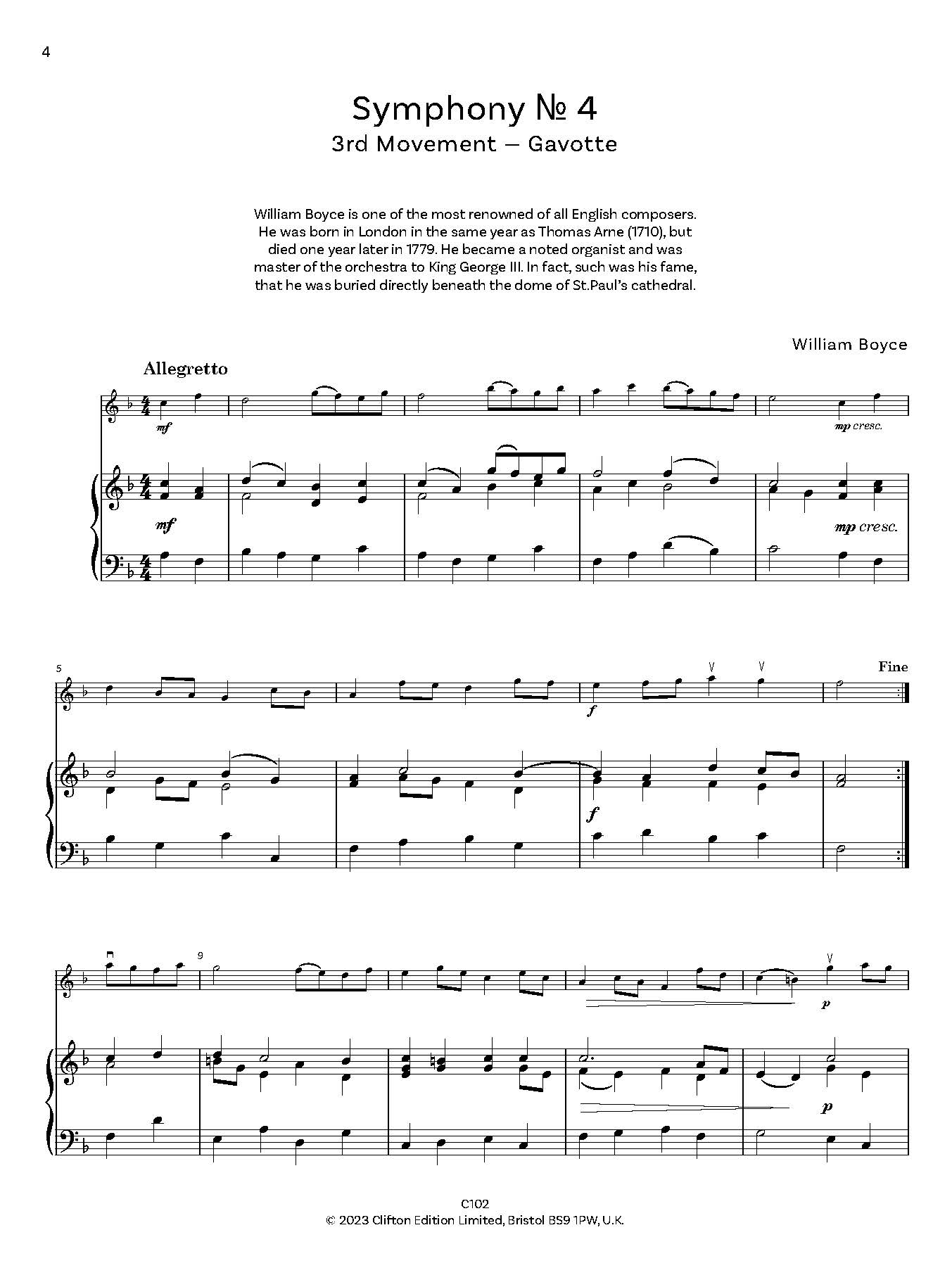
- Symphony № 4 — Gavotte — William Boyce
- Symphony in G — 3rd movement — Leopold Mozart
- Symphony № 94 — 2nd movement — Franz Joseph Haydn
- Symphony № 4 — 1st movement — Johann Christian Bach
- Symphony in G major — 2nd movement — Karl Ditters von Dittersdorf
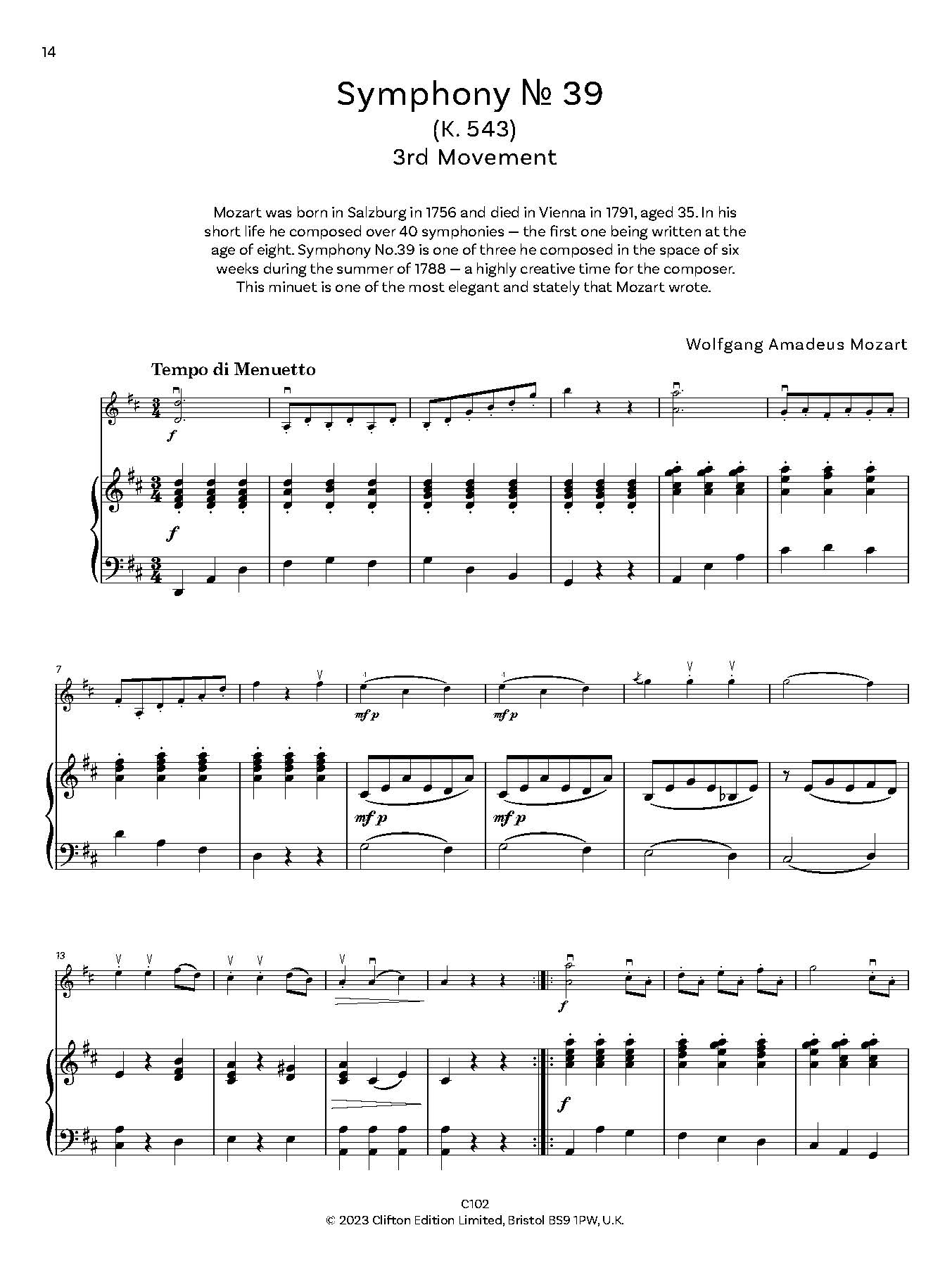
- Symphony № 39 — 3rd movement — Wolfgang Amadeus Mozart
- Symphony № 7 — 2nd movement — Ludwig Van Beethoven
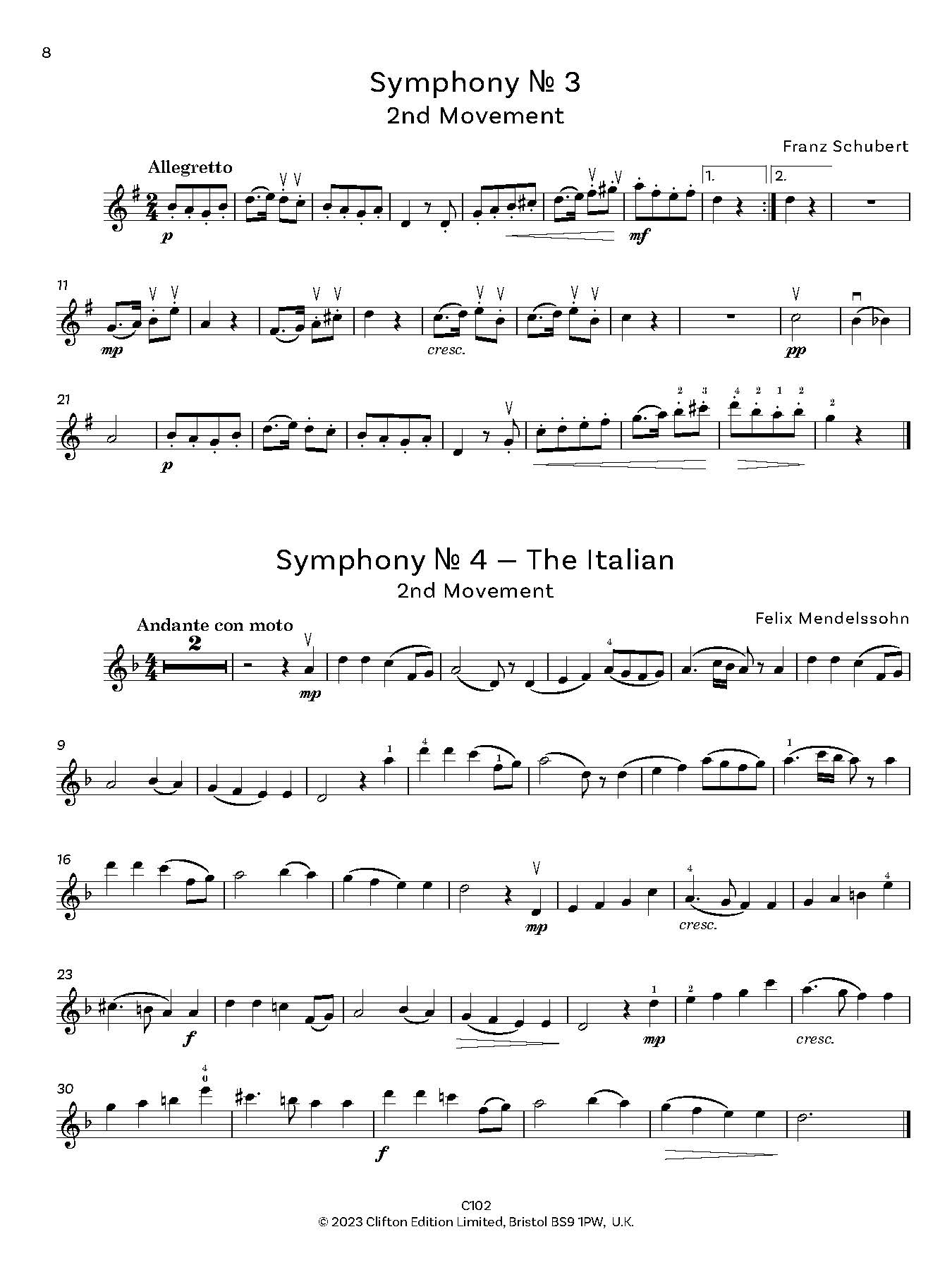
- Symphony № 3 — 2nd movement — Franz Schubert
- Symphony № 4 — 2nd movement — Felix Mendelssohn
- Symphony № 1 — 4th movement — Johannes Brahms
- Symphony № 6 — 4th movement — Pyotr Ilyich Tchaikovsky
- Symphony № 9 — 2nd movement — Antonín Dvořák
- Symphony № 5 — Adagietto — Gustav Mahler
Listen
Extract from Mozart's Symphony No. 39, Minuet
Sample Pages