Trombone Concerto
Op. 65
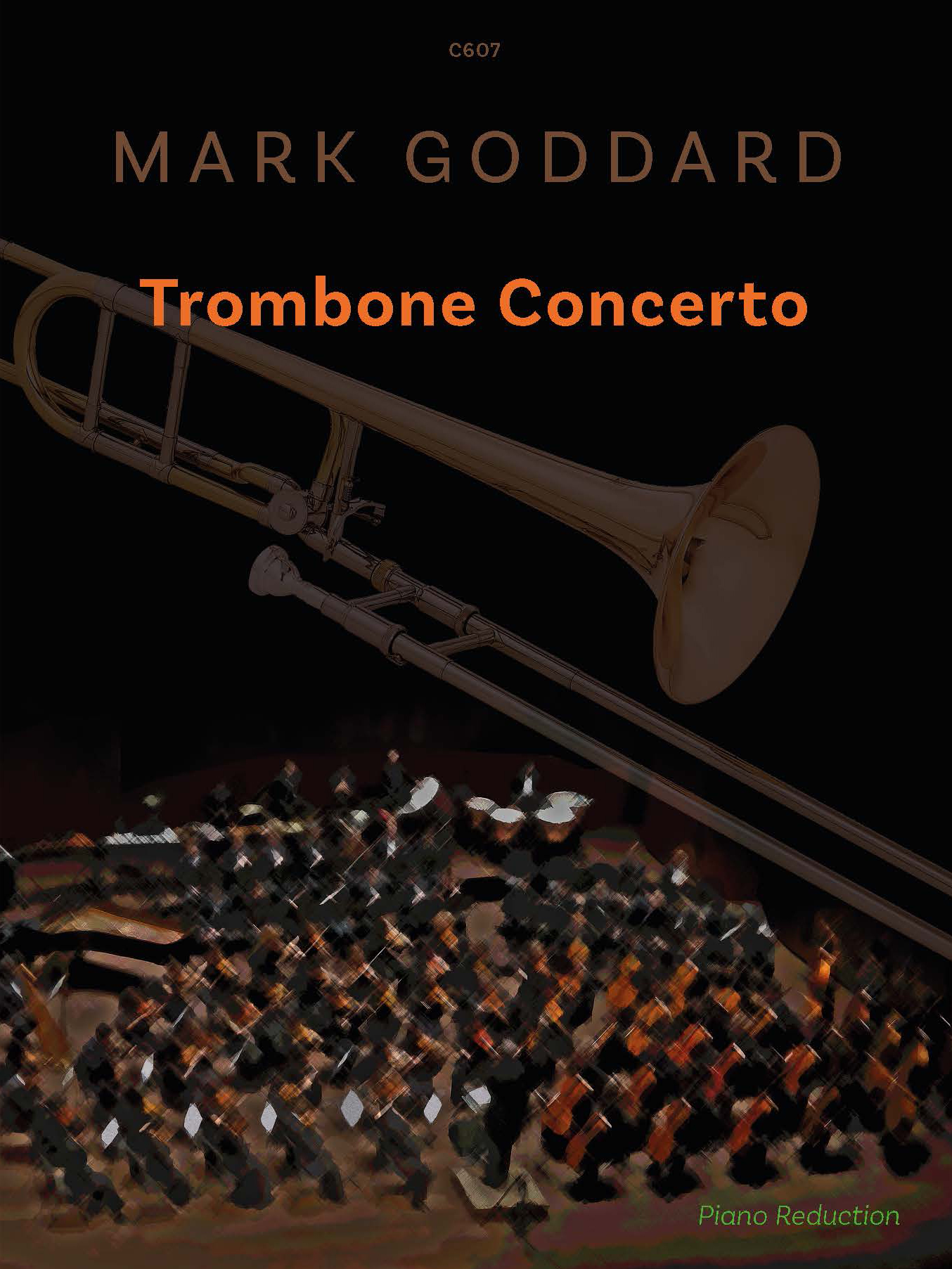
C607 Cover
Tenor Trombone & Piano (or orchestra)
Mark Goddard
Catalogue number: C607
ISMN: 979-0-57081-607-1
Former catalogue number: SP1393
Previous Publisher(s): Spartan Press
Price: £12.95
Availability: Print and Download
Grade 8+

See also…

Goddard Mark
– – – – –

More contemporary titles
– – – – –

More music for trombone
– – – – –

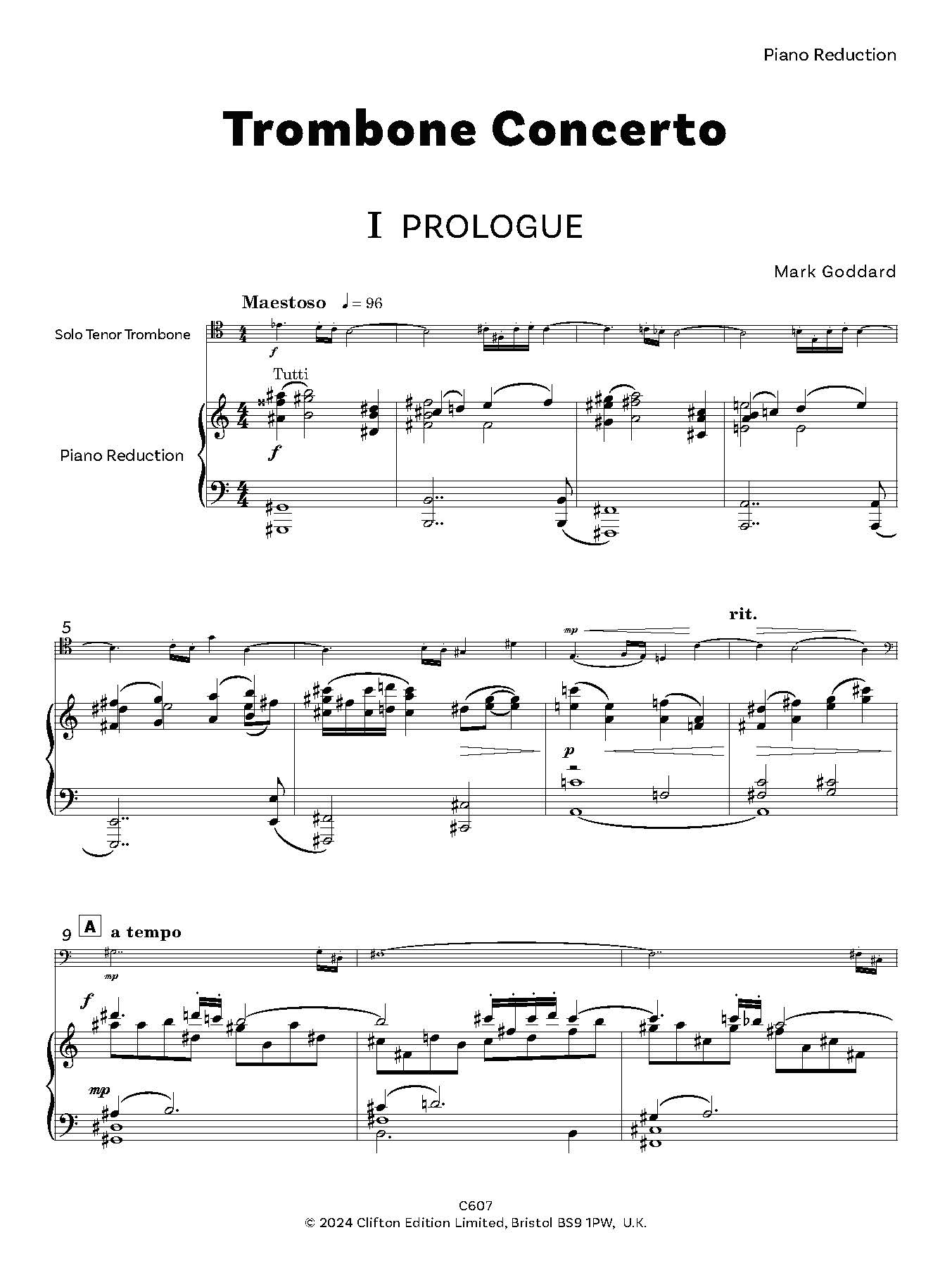
This is piano reduction for Solo Tenor Trombone with piano.
Orchestral material also available (catalogue number: C608).

Five movements.

Commissioned in 1985 by John Esaias and the Burford Orchestra for the trombonist Michael Skitt.
First performed in March 1986.
Fully revised in 2018.

This concerto can be performed in any of the following configurations:

Concerto‘ (movements I – V) duration: 20 minutes
Concertino‘ (movements I, III and V) duration: 13½ minutes
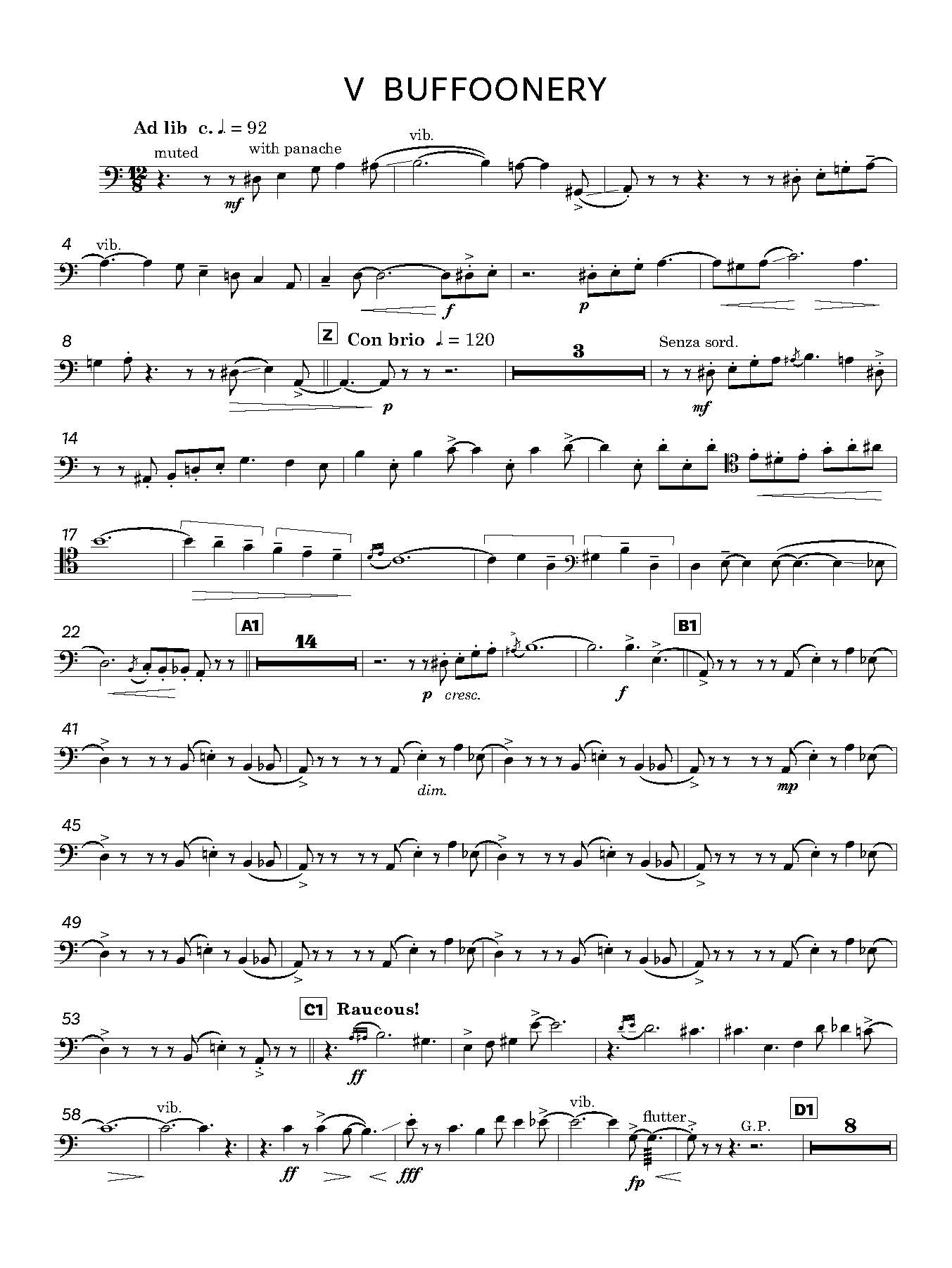
Buffoonery‘ (last movement only) duration: 4 minutes

Contents

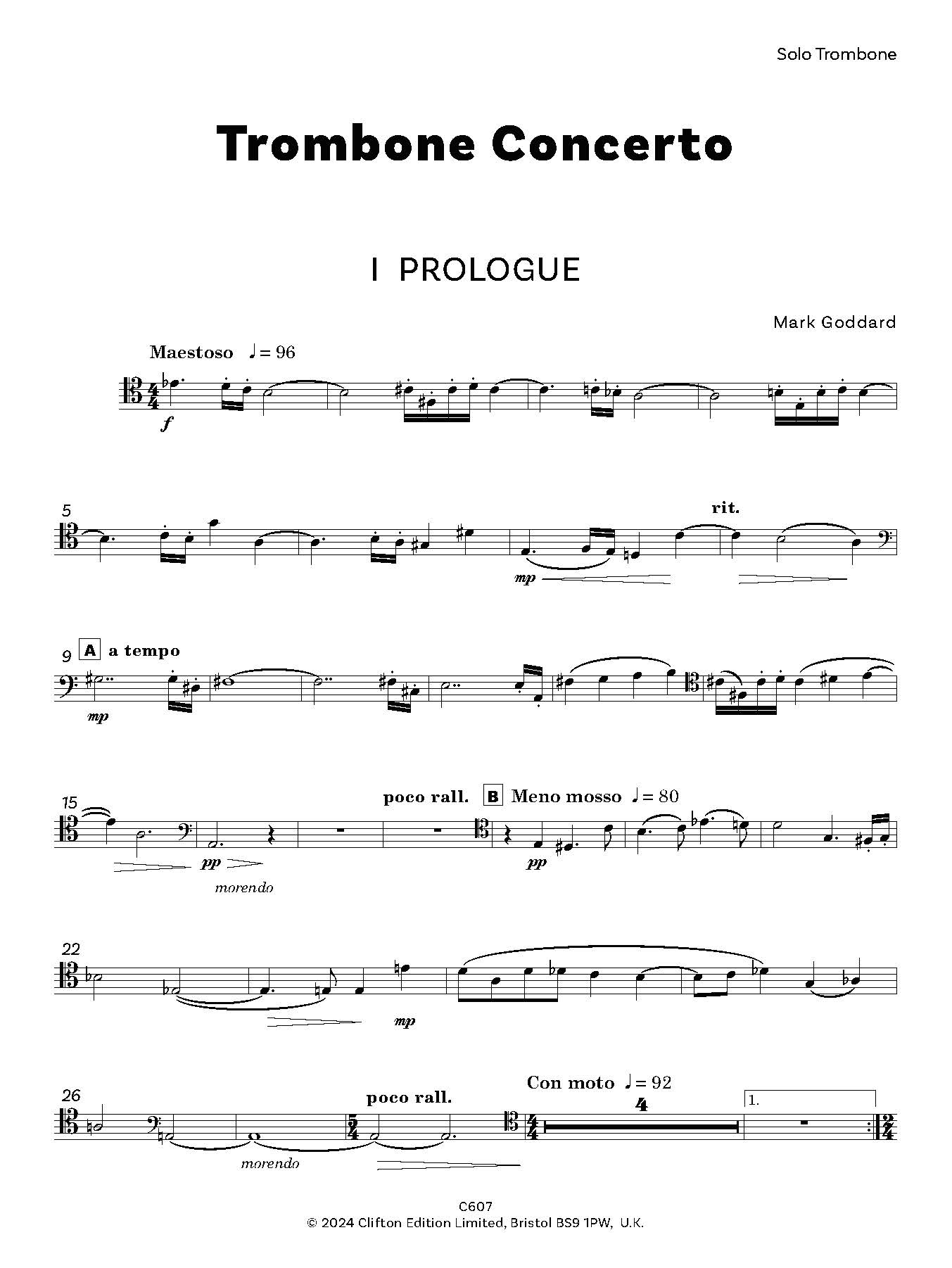
I Prologue 4½ minutes
II Aria 3½ minutes
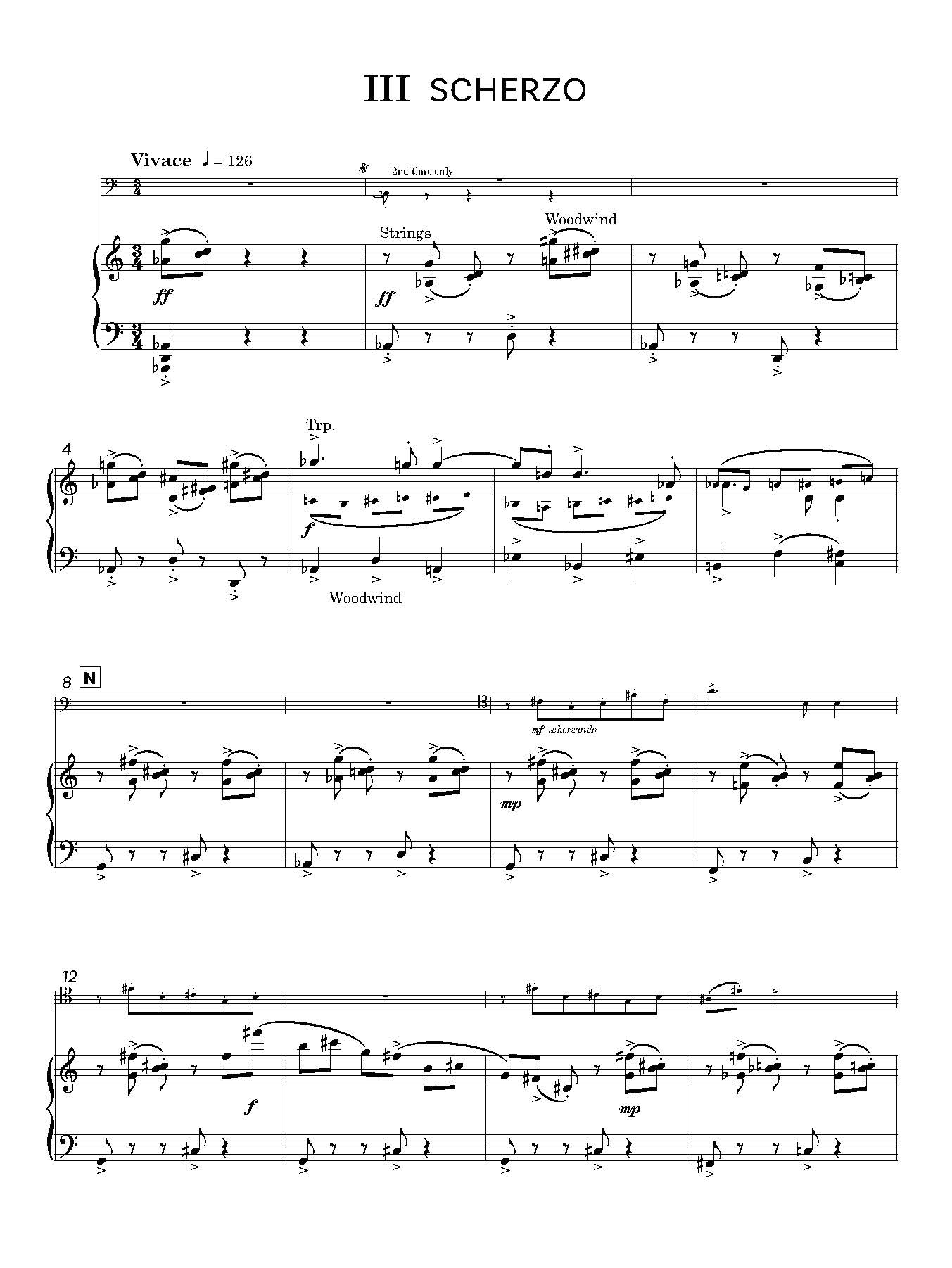
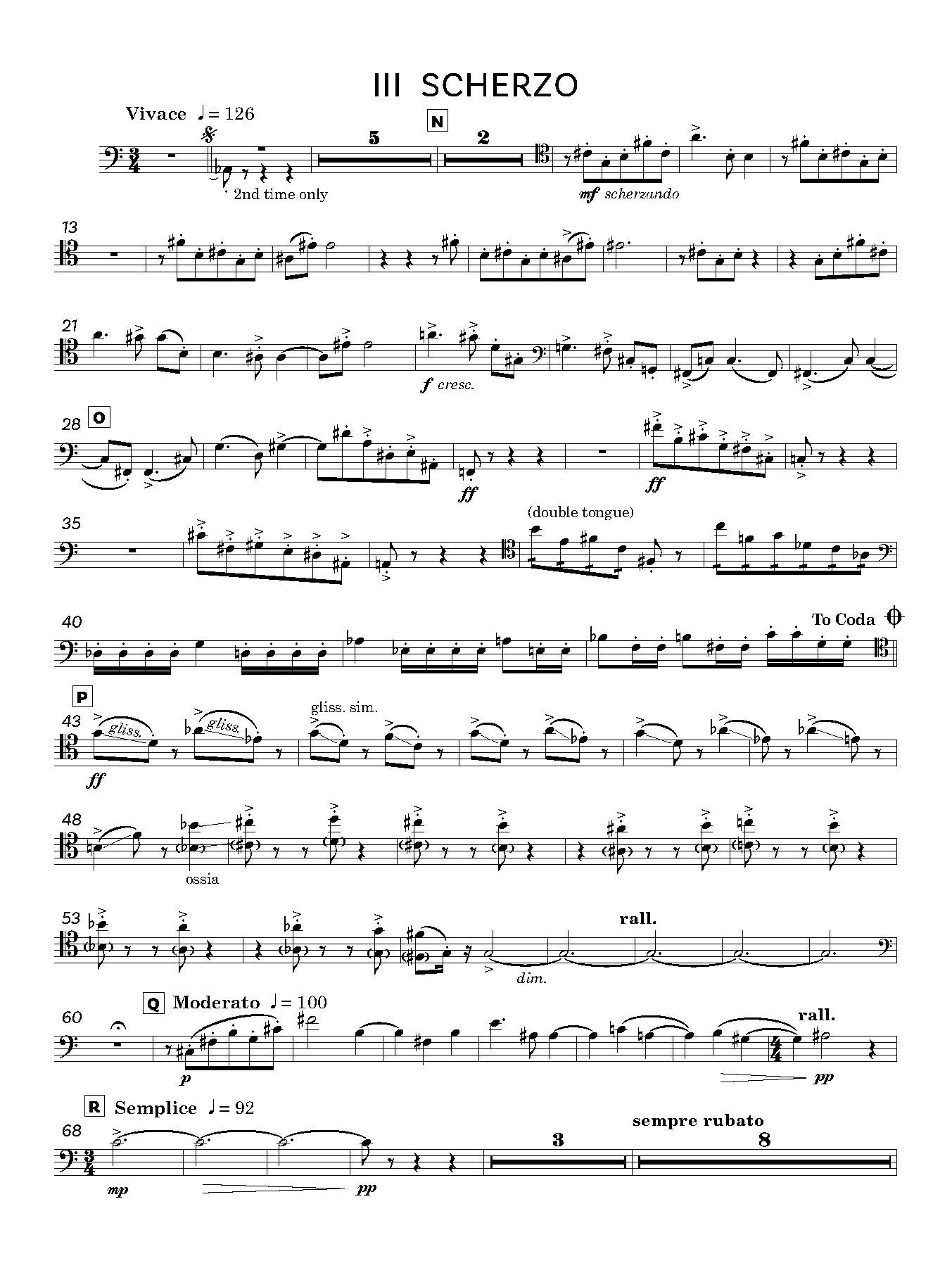
III Scherzo 5 minutes
IV Canzona 3 minutes
V Buffoonery 4 minutes

YouTube Video

A quick introductory tour
of the Trombone Concerto. 

Review in The Trombonist Magazine (Spring 2026)

    So here’s something new, that I think is well worth looking at. Mark Goddard’s Trombone Concerto is in five movements, it lasts twenty minutes, and would be a great centrepiece as we come to recital season at the music colleges.

    I said it was new, but that’s only for those of us that hadn’t come across it before; it was written in 1985, and revised in 2018, so this final version is yet to be performed.

    This is not a ‘modern’ work, there are no dissonant moments to broaden your harmonic horizons and make you nod in acceptance. In other words, it’s a thoroughly good listen, and the non-contemporary angle actually does make it a breath of fresh air.

    If it’s a good listen, it’s a good play too, sitting in healthy trombone registerthroughout, with rests where needed, though it is on your face for the occasionallong passage. I would say that there are a couple of moments where breathing could be an issue, and there are a few glisses which will have to be faked.

    The Prologue is a strong opening movement, dramatic and gripping from the start. The Aria isn’t the contrasting floral melody you might be expecting. The Scherzo is more demonic than frivolous, and the Canzona only provides a smallmeasure of softer melody, and still with drive. This is all good. The composer does, however, provide a lighthearted final movement, Buffoonery, which is a rather end-of-the-pier number to round things off in the 1960s.

…the piece is very reasonably priced for any students wishing to give a world premiere this summer.